Science
Discover facts about science. Small discoveries that change the way you see familiar things.
Science

Jupiter's moon with hundreds of active volcanoes
Io gets volcanically busy because it’s being flexed like a stress ball. Europa and Ganymede help keep its orbit a little oval, so Jupiter’s gravity repeatedly…
Discover more
Fold paper 42 times and it could reach the Moon
Each fold doubles the paper’s layers, so the stack grows by doubling rather than adding one sheet’s thickness at a time. After 42 ideal folds, the math puts…
Discover more
How scientists rank the power of alien civilizations
This scale ranks civilizations by how much energy they can use, not how clever they are. A Type I civilization can harness energy on a planetary scale, and…
Discover more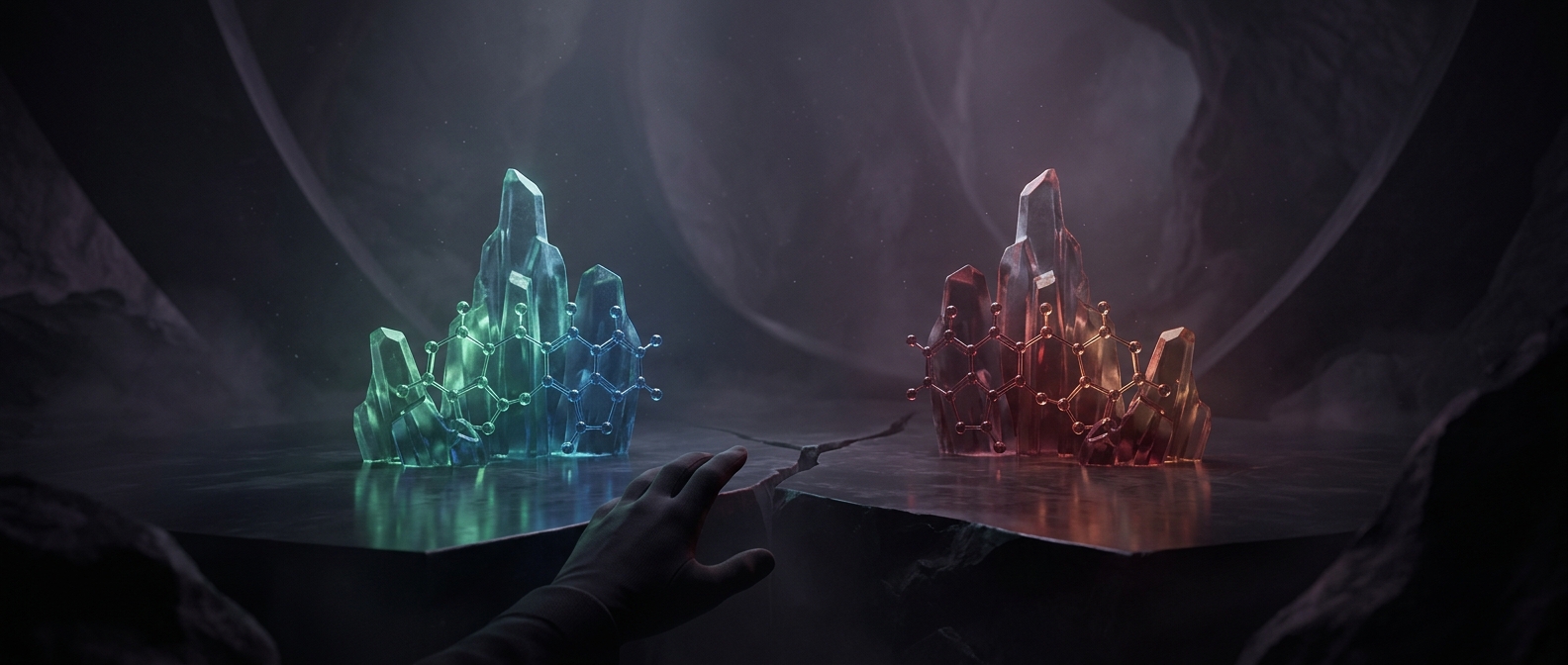
A drug’s mirror image can be deadly
Some drug molecules come in left- and right-handed forms. A body protein has a shape that may fit one hand neatly and the other awkwardly, changing how the…
Discover more
Your eyes can detect a single photon
A rod cell can respond to a single photon, but that tiny signal still has to stand out from the visual system’s own background noise. If it does, your brain…
Discover more
Why the math behind flying is still so hard
Airflow around a wing can change in response to its own changes. A small shift redirects the flow, which can amplify that shift or send the air somewhere…
Discover more STACKY FOR IPHONE
A bigger world.
One discovery
at a time.
Keep discovering with Stacky. Interesting facts in an app that is always within reach.
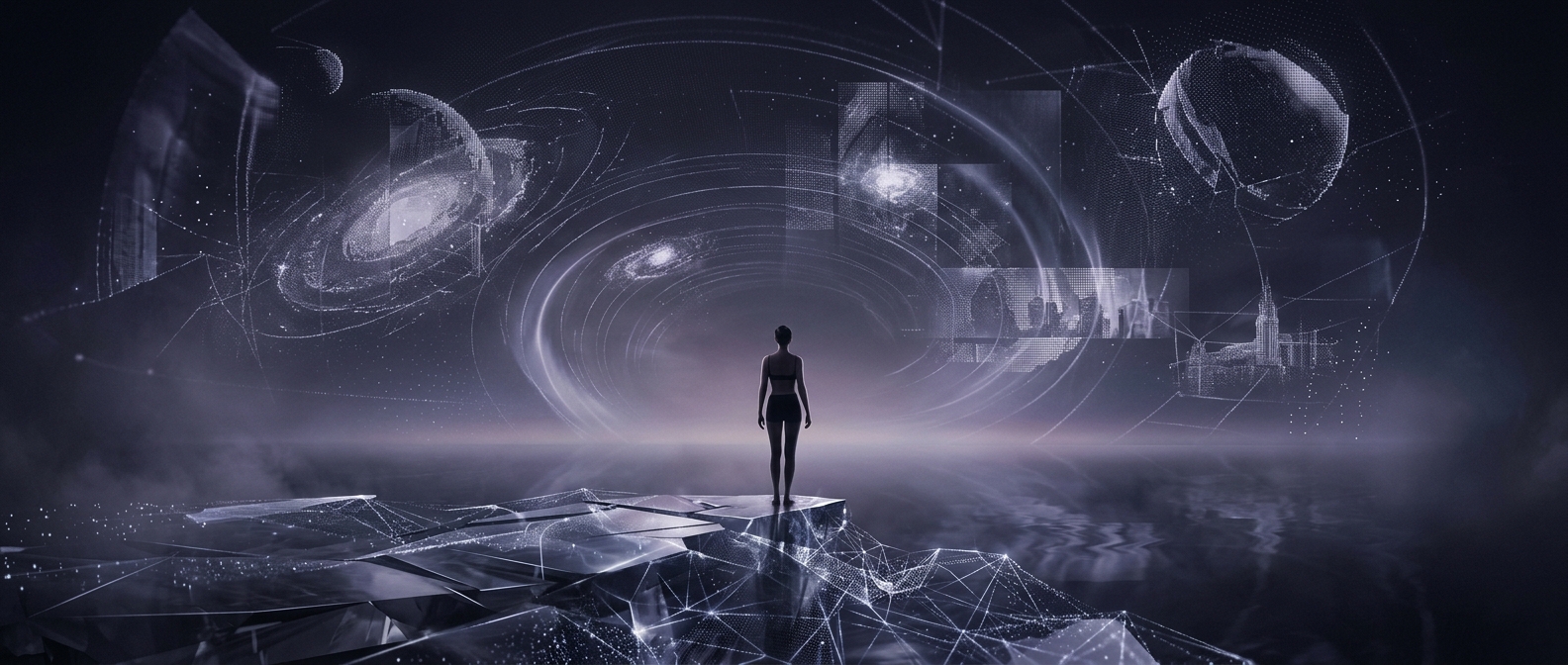
Could a 3D universe fit on a 2D boundary?
The holographic principle proposes that the information describing a region of space could be represented on its boundary. Some theories make this connection…
Discover more
Why nature keeps making fractal patterns
Many natural fractals repeat a pattern at smaller scales, though they aren’t exact copies all the way down. A leaf’s main veins divide into smaller branches…
Discover more
The hypothetical substance that could spread through the universe
The idea starts with a tiny fragment of strange quark matter, a hypothetical material made with a different mix of the particles inside atoms. If it were more…
Discover more
Engineers can make heat take a detour
Thermal cloaks arrange materials that conduct heat differently, guiding heat around a region rather than straight through it. The trick lies in the layout,…
Discover more
Why room-temperature superconductors matter so much
In a normal wire, resistance is like friction: some electrical energy becomes heat along the way. A room-temperature superconductor would carry current…
Discover more
Africa once had a natural nuclear reactor
At Oklo, groundwater helped uranium atoms split in a chain reaction. Water slowed the particles released by each split, making them more likely to trigger…
Discover moreTheoretical physicists have proposed the absolutely mind-bending concept that our entire three-dimensional universe is actually just a holographic projection emanating from a…
The holographic principle is a bizarre but mathematically sound solution to the black hole information paradox. It suggests that all the information making up…
Discover moreTheoretical physicists are wrestling with terrifying mathematical paradoxes suggesting that supermassive black holes do not simply crush matter into nothingness, but rather tear…
The mathematical reality of supermassive black holes completely shatters our understanding of classical physics. Leading researchers now theorize that the…
Discover moreDeep within the atmosphere of Jupiter exists an incredibly massive and violently swirling crimson storm system famously known as the Great Red Spot, a chaotic raging hurricane so…
This ancient anticyclonic storm has been relentlessly churning for over three hundred years, fueled by Jupiter's internal heat rather than solar energy. It…
Discover more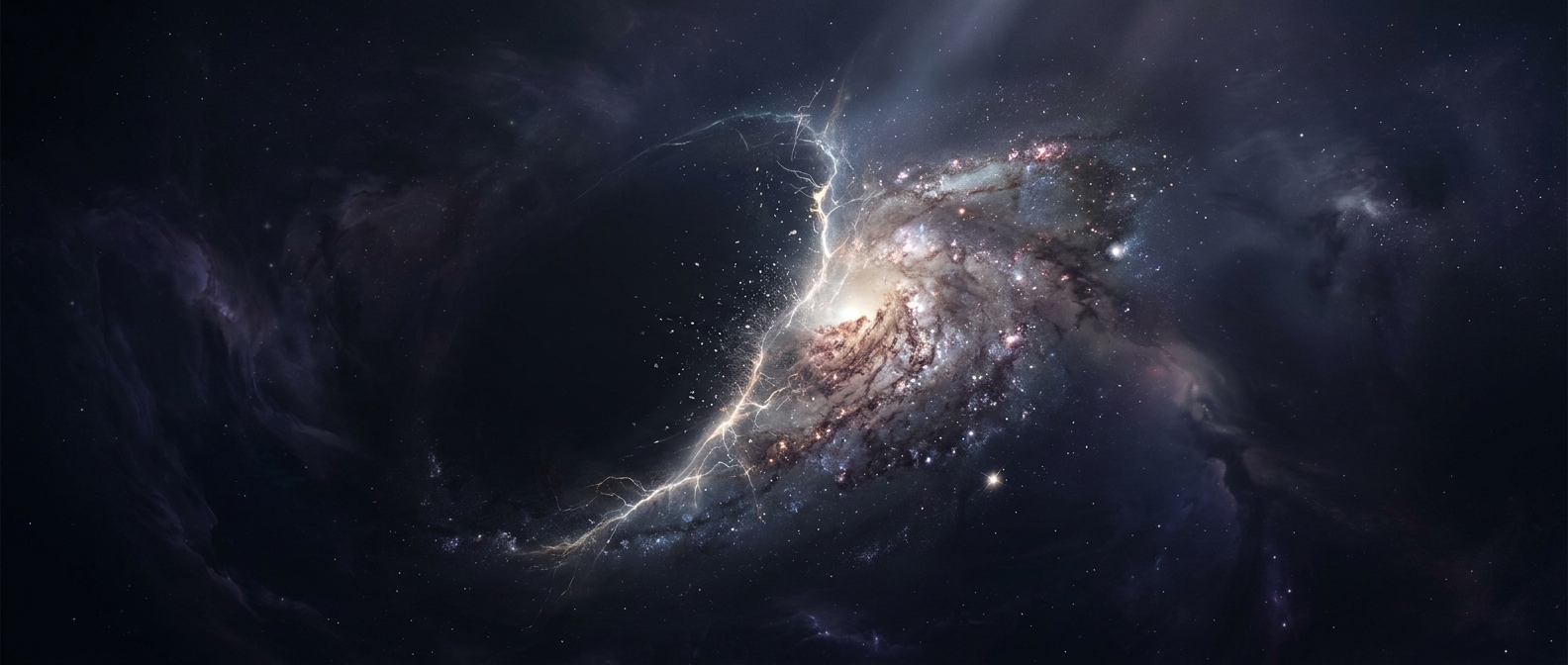
Could a false vacuum erase the universe
In this hypothetical, quantum tunneling would create a bubble of vacuum with lower energy than the one we occupy. If it expanded, the familiar rules governing…
Discover more
Why empty space isn't truly empty
A vacuum has no ordinary particles, but it still has quantum fields. Even in their lowest-energy state, those fields can fluctuate and affect physical…
Discover more
Antimatter leaves a recognizable glow across the Milky Way
When positrons meet electrons, they can annihilate and produce gamma rays with a characteristic energy of 511 keV. Instruments have mapped this signal,…
Discover more
Bizarre reality of string theory explained
Extra dimensions in string theory are mathematical possibilities, not places anyone has observed. If they exist, they might be curled up so tightly that even…
Discover more
Why time slows as you approach light speed
At ordinary speeds, the difference is too tiny to notice. But near light speed, you and someone you pass each measure the other’s clock as running slow, while…
Discover more
Graphene helped scientists film gold atoms beside a liquid
Manchester researchers reported atomic-resolution video at a solid-liquid interface using tiny graphene enclosures. The thin enclosure kept a usable liquid…
Discover more
What if the universe is a computer simulation
For an idea to count as a scientific explanation, it needs to make predictions that observations could prove wrong. The simulation idea has not established…
Discover more
Can scientists erase a traumatic memory
Recalling a memory can briefly make it changeable before the brain stores it again. Researchers are exploring whether treatment during that window could…
Discover more
Absurd physics of liquid light states
This “liquid” starts with light trapped in a specially designed cavity, where it interacts with excitations in the material. The two combine into hybrid…
Discover more