Science
Discover facts about science. Small discoveries that change the way you see familiar things.
Science
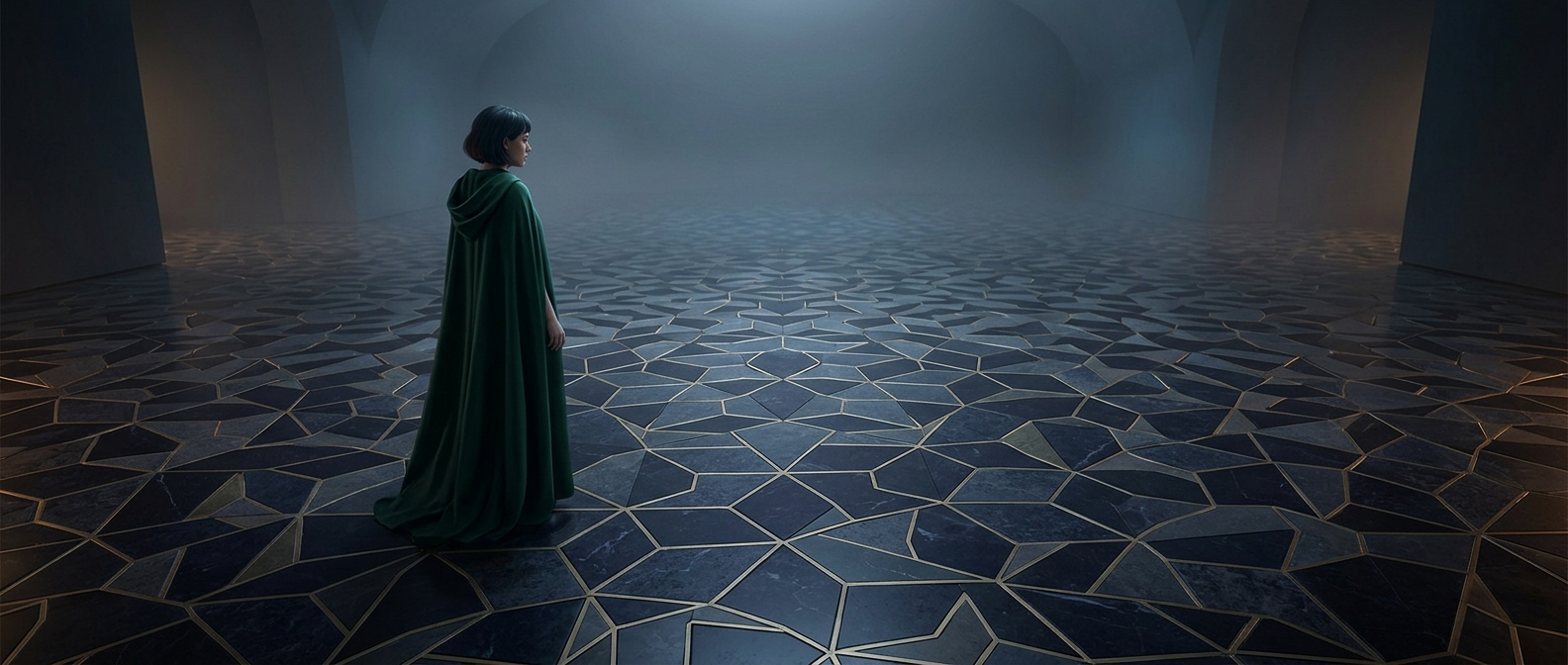
Two diamond shapes can tile a floor without repeating
Lay the two kinds of diamonds so their edges follow carefully constrained matching rules. Local groups can recur, giving the eye familiar patches, but there…
Discover more
In Japan, rooms are built around tatami mats
Tatami mats helped determine the size of traditional Japanese rooms: people could describe a space by how many mats fit inside. It’s a bit like measuring a…
Discover more
Traditional Japanese houses use translucent paper screens
Shoji paper scatters incoming light, brightening a room without letting you see clearly through the screen. But the thin sheet blocks sound much less than a…
Discover more
Why a troy ounce is heavier than an ounce
Two ounces can share a name without sharing a weight. A troy ounce, used for precious metals, is about 31.1 grams; an ordinary ounce is about 28.35 grams.…
Discover more
Why rational suspects betray each other
In the prisoners’ dilemma, confessing can look like the safest choice for each person on their own. But when both make that choice, both do worse than they…
Discover more
The ice cream that stretches like rubber
This ice cream gets its pull from salep, which thickens the mixture and makes it elastic. That lets a vendor stretch and flip a scoop instead of watching it…
Discover more STACKY FOR IPHONE
A bigger world.
One discovery
at a time.
Keep discovering with Stacky. Interesting facts in an app that is always within reach.

Barn measures tiny areas in subatomic physics
A barn is an area unit so tiny that it is useful for describing interactions with atomic nuclei: one barn equals 10⁻²⁸ square meters. In particle physics, it…
Discover more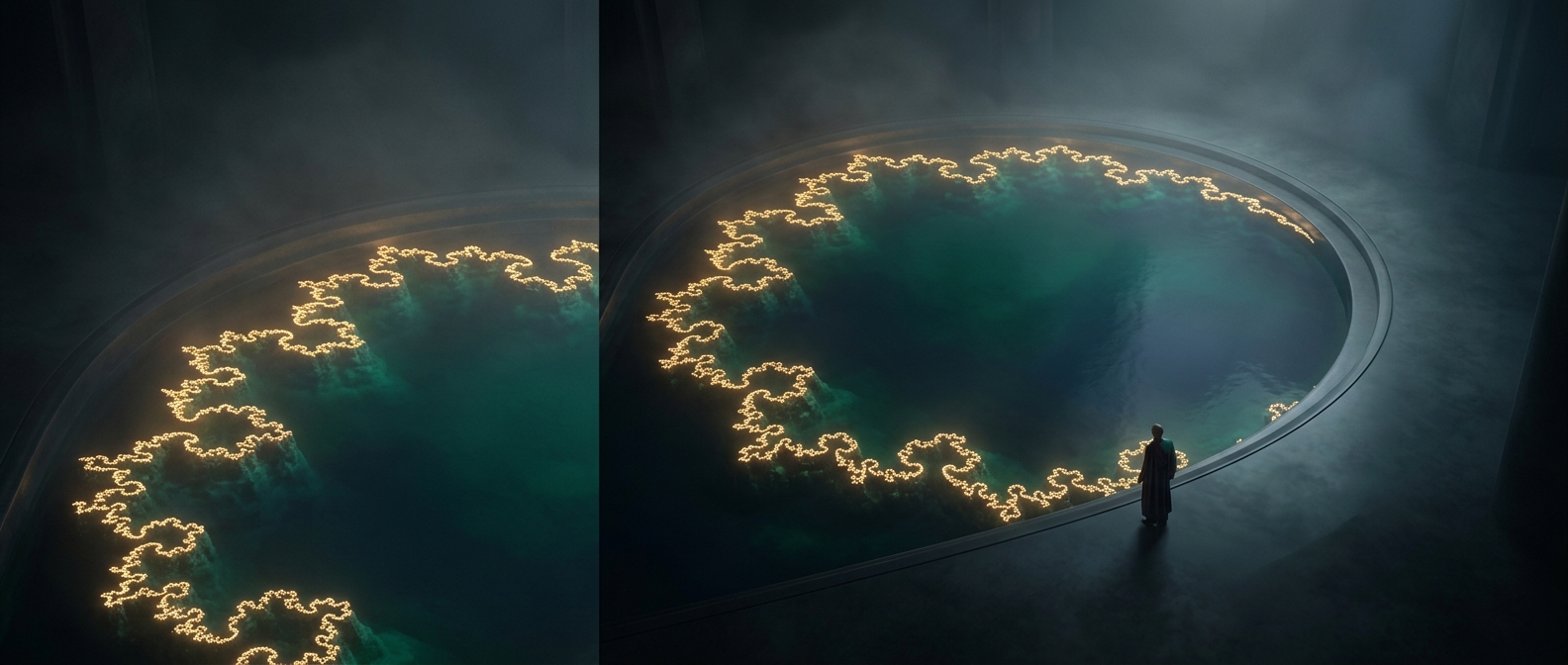
A fractal can have an infinite edge but finite area
In a Koch snowflake, each edge is replaced by four smaller edges, each one-third as long as the original. That makes the perimeter grow by a factor of…
Discover more
Why 0.999... equals 1
The repeating threes in 1/3 never stop: 1/3 = 0.333.... Multiply that decimal by 3 and every digit becomes a 9, giving 0.999... = 1. There is no last 9 with a…
Discover more
Zeno's paradox makes reaching anywhere seem impossible
To reach a wall, you could first cover half the distance, then half of what’s left, then half again. Zeno’s puzzle points out that this creates endlessly many…
Discover more
Pigeonhole principle proves duplicate items must exist
If there are more people than possible hair-count categories, at least two people must share a count. Give each person a category—their number of hairs—and…
Discover more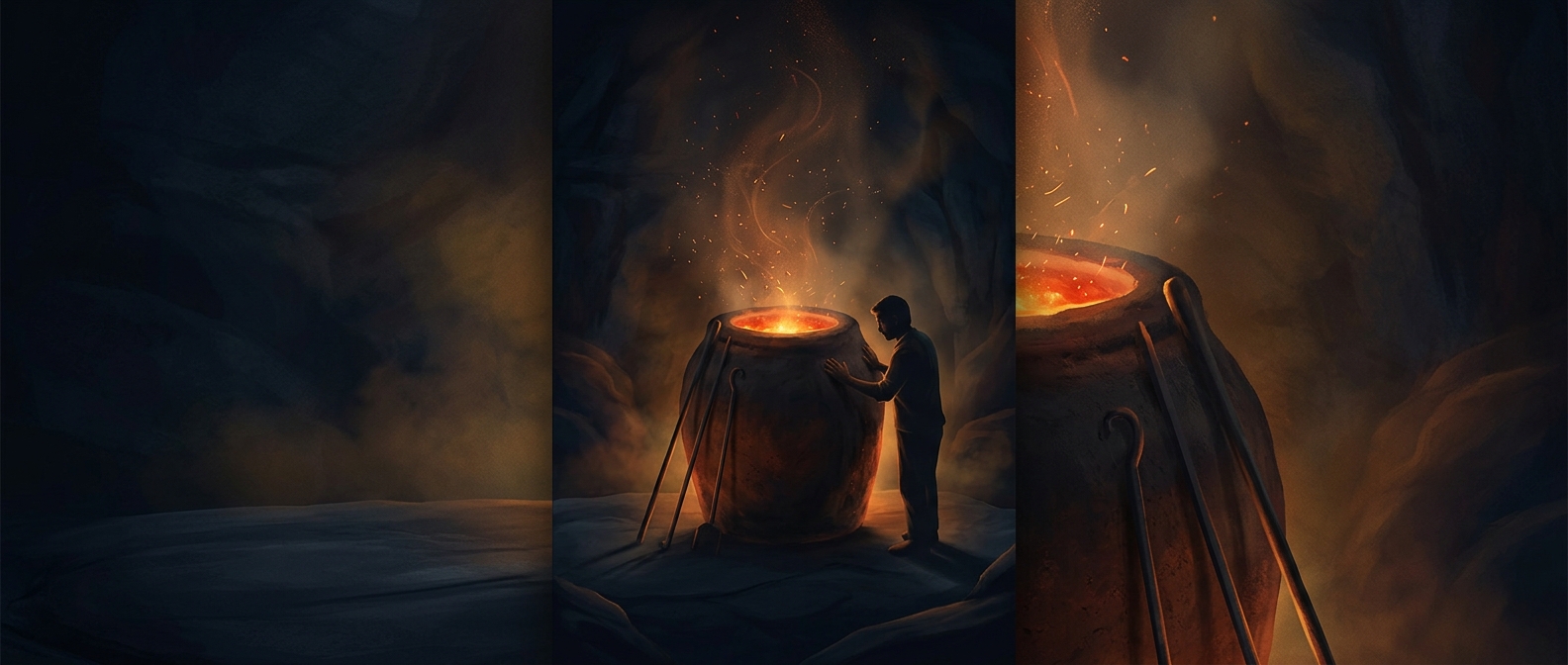
The oven hot enough to bake bread in a minute
A tandoor’s clay walls stay hot and radiate heat straight onto the bread, while the bell-shaped oven traps hot air around it. The dough cooks from both sides…
Discover more
Why dust sticks to fans that blow air
Right beside a fan blade, air slows because it rubs against the surface. Dust can settle in that sluggish layer even while faster air rushes past above it. So…
Discover more
Floating cereal pieces follow tiny slopes in the milk
A floating object bends the liquid surface around it. Nearby objects interact through that curved surface and surface tension, making pieces gather together…
Discover more
A mathematical horn can have finite volume and infinite surface area
Gabriel's horn narrows forever: its enclosed volume approaches a fixed amount, while its surface area keeps growing without a limit. That creates the apparent…
Discover more
Why hexagons fit together so well
Hexagons cover a surface without leaving gaps, and their many sides keep them close to the space-saving shape of a circle. Circles are excellent at enclosing…
Discover more
Traveling salesman problem lacks any fast computational fix
A computer can find a short route through many cities, but proving it is the absolute shortest is a much bigger job. To certify the best route, it may have to…
Discover more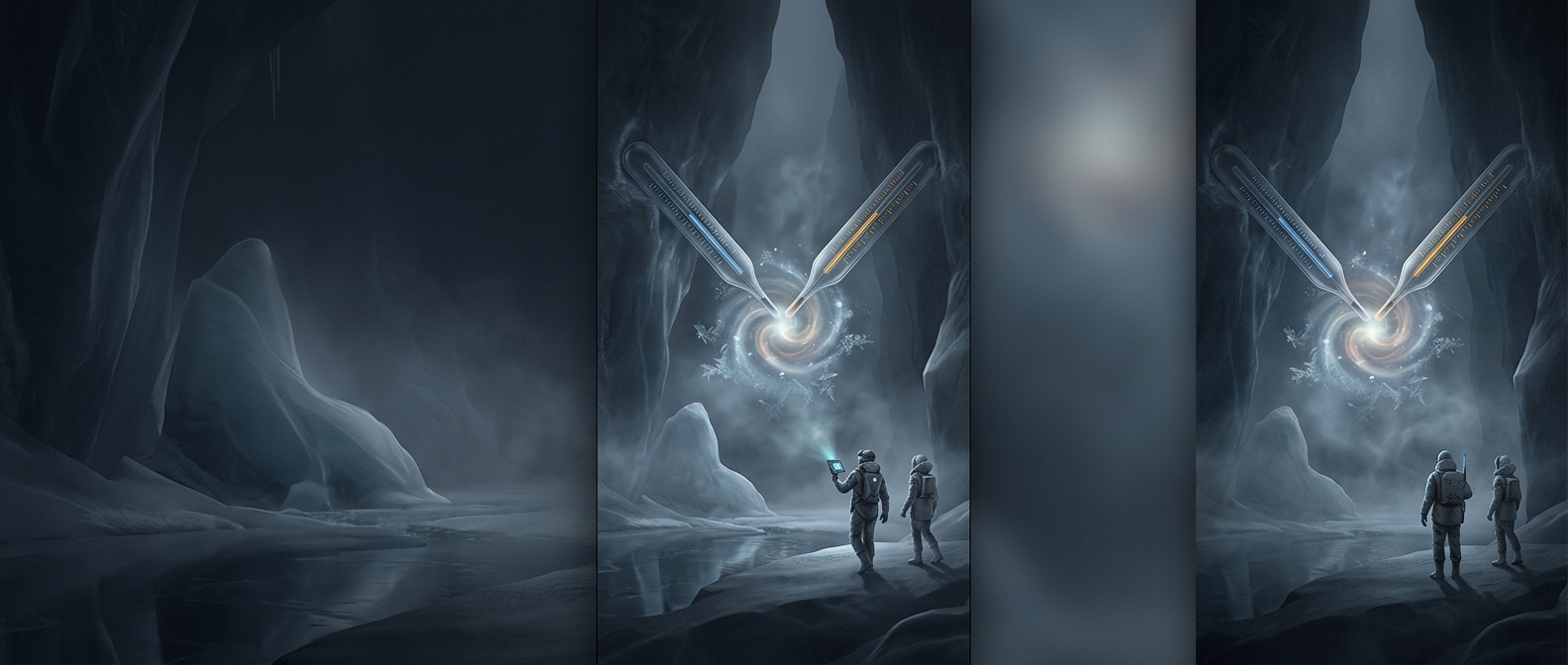
At minus 40, Celsius and Fahrenheit finally agree
The scales meet at −40: −40°F equals −40°C. Fahrenheit and Celsius use different zero points and different-sized degrees, but their lines cross at that…
Discover more
Standard gravity accelerates precisely at nine point eight
Standard gravity is a fixed reference value: 9.80665 meters per second squared. Real gravity varies slightly from place to place, so engineers use the agreed…
Discover more
Tesseracts form four dimensional mathematical cubes
A tesseract is a cube extended into a fourth spatial dimension, beyond the three we can directly see. To picture one, mathematicians project it into three…
Discover more
Spheres pack perfectly tightly into twenty-four dimensions
A sphere in the 24-dimensional Leech lattice has 196,560 touching neighbors, compared with 12 in a tight packing in three dimensions. The sphere hasn’t…
Discover more
How a twisted loop ends up with one side
The half-twist joins the strip’s two faces into one unbroken surface. Trace it with a finger and you’ll cross from what looked like one side to the other…
Discover more
Kyoto's famous rock garden makes fifteen stones hard to see at once
At Ryoanji, stones sit in groups across a small field of raked gravel. From the usual viewing area, their overlap hides part of the arrangement, so changing…
Discover more
A Klein bottle has one surface but no separate inside
It is a two-dimensional mathematical surface that can be embedded without self-intersection in four-dimensional space. A glass model in our three-dimensional…
Discover more