Health
Discover facts about health. Small discoveries that change the way you see familiar things.
Health

Why antiperspirant works better at night
The active salts need time to form plugs in sweat ducts, and those plugs reduce how much sweat reaches the surface. Overnight gives the process a head start…
Discover more
Hiccups that last for days deserve medical attention
A diaphragm spasm followed by closure at the voice box makes the familiar sound. When that reflex continues beyond 48 hours, it can interfere with sleep and…
Discover more
Trillions of bacteria can weigh just a few ounces
A 2016 calculation for a reference adult estimated roughly 38 trillion bacterial cells, with a total mass of about 200 grams. Tiny cells can be astonishingly…
Discover more
The military dog tags behind medical alert bracelets
The bracelet borrows a simple feature of military dog tags: important information is stamped onto metal and carried on the body. If someone is unconscious,…
Discover more
When mail-order catalogs sold electric cures
The idea was that a mild electric current could jolt everyday ailments into disappearing, so buyers buckled on waistbands lined with batteries. The garment…
Discover more
A Roman tourniquet survives as a piece of bronze engineering
The Science Museum holds a Roman thigh tourniquet with a metal tightening mechanism. Its purpose was to compress a limb and restrict bleeding. The surviving…
Discover more STACKY FOR IPHONE
A bigger world.
One discovery
at a time.
Keep discovering with Stacky. Interesting facts in an app that is always within reach.

The ancient Chinese origin of hospital privacy screens
Before a screen stood between hospital beds, folding room dividers served as furnishings for the wealthy in ancient China. The modern privacy screen inherited…
Discover more
Doctors once listened through a wooden tube
A hollow wooden tube let doctors listen to the chest while keeping some distance from the patient. It seems basic now, but it turned an awkward, close-contact…
Discover more
Medicine's real symbol has only one snake
The Rod of Asclepius—a single snake winding around a staff—is the healing emblem linked to the Greek god of medicine. The two-snake caduceus belongs to Hermes…
Discover more
A kettlebell puts the weight where your hand isn't
Unlike a dumbbell, its main mass sits beyond the handle rather than around your grip. That offset changes how it swings and how you control it. The unusual…
Discover more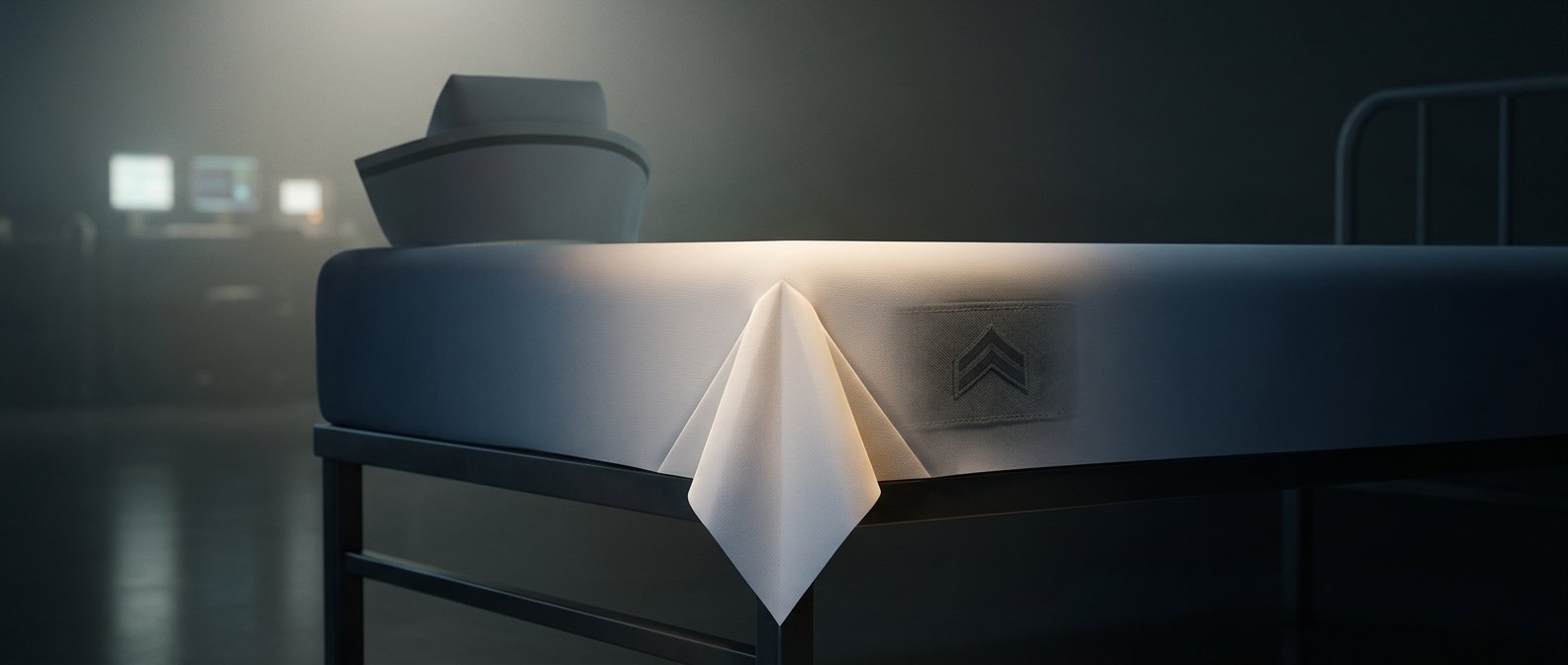
Hospital corners make a flat sheet hold like a fitted one
The diagonal fold gathers the sheet's loose fabric into a neat tuck beneath the mattress. Tension keeps the corner from hanging or pulling free as easily. The…
Discover more
A stationary exercise machine was patented in 1796
Francis Lowndes's Gymnasticon resembled an exercise bicycle and was intended to move the body's joints. Its purpose was therapeutic exercise rather than…
Discover more
Medical diplomas were traditionally written in pure Latin
Latin gave institutions a common language for formal credentials for centuries. That convention could lend a diploma an air of authority, with the trade-off…
Discover more
Hospital elevators have a hidden emergency override
The switch changes who gets priority: instead of stopping for each floor request, the elevator goes directly to the emergency destination. That shortcut is…
Discover more
Why doctors still use pagers
A pager’s radio signal can reach deep into reinforced hospital basements where cell service may disappear. In a building full of concrete and steel, the older…
Discover more
Why clinic waiting rooms keep strangers apart
The layout does some of the social work for you: chairs turned away from one another offer fewer chances for eye contact or conversation. Instead of facing a…
Discover more
Medical waste bins are strictly colored red for danger
Bright red makes certain medical-waste bins stand out from ordinary trash. That quick visual distinction matters when staff are tired or distracted: the bin’s…
Discover more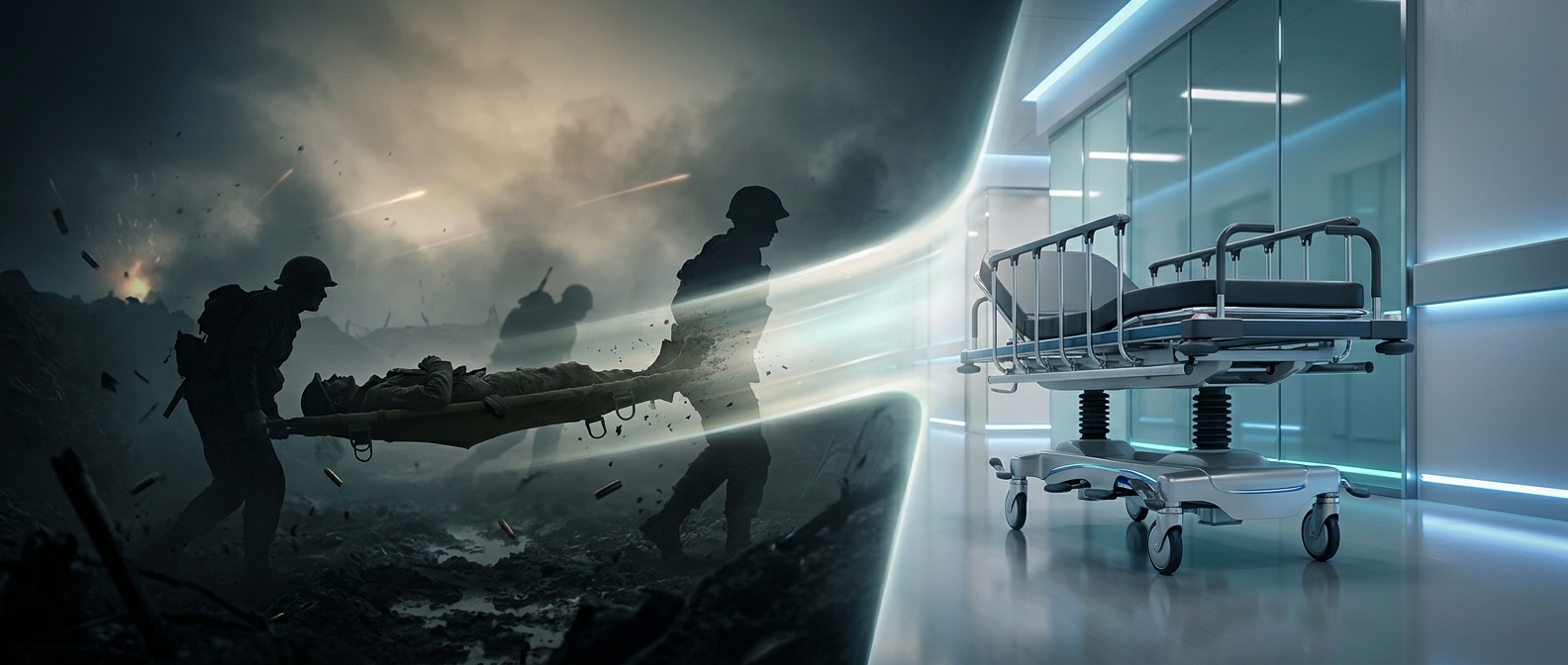
A hospital stretcher is more than a bed on wheels
Adjustable height helps align it with other surfaces, rails keep the patient contained, and central brakes secure it for transfers. Some models add a…
Discover more
Why trauma shears have a blunt blade
A sharp point would be risky when someone is cutting away a bandage beside injured skin. So trauma shears use a rounded lower blade that can slide underneath…
Discover more
Cotton swabs began with a dangerous toothpick hack
The clever part was softening the point. Leo Gerstenzang saw his wife wrap cotton around sharp toothpicks to clean hard-to-reach places, then mass-produced a…
Discover more
Commercial first-aid kits grew out of a railway problem
Johnson & Johnson introduced its kits in 1888 after hearing about railway workers injured far from medical supplies. Packing dressings and other essentials…
Discover more
An early air ambulance turned days of travel into 45 minutes
In 1917, a wounded soldier in Egypt was flown 44 miles to medical care in the observer's seat of a B.E.2c biplane. The journey across desert terrain would…
Discover more
A shoemaker's leatherworking skills became a prosthetics business
In 1866, James Gillingham offered to make an artificial arm for a man injured by a cannon. He developed ways to shape leather to the wearer and harden it into…
Discover more
Hand sanitizer's supporting ingredients have different jobs
In the World Health Organization's standard liquid formulations, alcohol provides the main antiseptic action and glycerol helps reduce skin drying. A small…
Discover more