Technology
Discover facts about technology. Small discoveries that change the way you see familiar things.
Technology
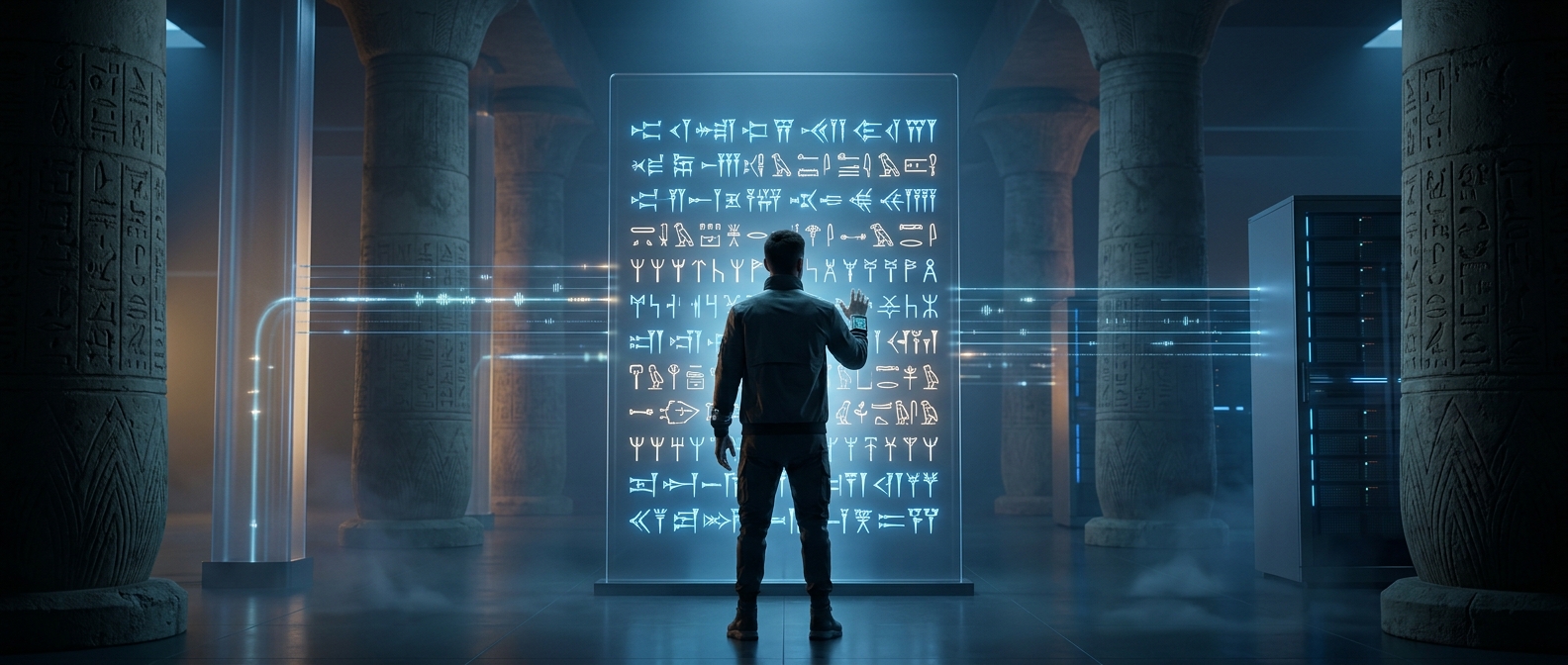
The eggplant emoji shares a standard with hieroglyphics
The same standard that defines the eggplant emoji also perfectly preserves Egyptian hieroglyphics and Sumerian cuneiform. A massive council of digital…
Discover more
Right-to-left overrides flip text backwards
There is a hidden, invisible character designed to support languages like Arabic that can be weaponized to render English backward. Trolls routinely inject it…
Discover more
Polyglot scripts run in multiple languages
Why write clean code when you can write a Frankenstein file that executes perfectly in five different programming languages? These scripts rely on overlapping…
Discover more
Infinite loops freeze everything permanently
A single missed exit condition will trap a processor in an eternal cycle of repeating the exact same useless task. It perfectly represents the human…
Discover more
Why pressing Enter still acts like a typewriter
Pressing 'Enter' on a modern keyboard triggers two separate invisible commands that date back to mechanical typewriters. It tells the cursor to drop down a…
Discover more
How animators make computers fill in the movement
Animators only plot the extreme starting and ending poses of a movement, leaving the computer to mathematically interpolate everything in between. This…
Discover more STACKY FOR IPHONE
A bigger world.
One discovery
at a time.
Keep discovering with Stacky. Interesting facts in an app that is always within reach.

Particle systems spit out endless digital sprites
Smoke, fire, and magic spells are actually just thousands of tiny, flat 2D images being vomited out of an invisible mathematical emitter point. They randomly…
Discover more
Why programmers hide DEADBEEF in computer memory
Because hexadecimal uses letters A through F, bored programmers constantly spell out hidden words in memory addresses. It is entirely common to find critical…
Discover more
What that black diamond with a question mark means
That black diamond with a white question mark inside is your system waving a white flag. It explicitly means the computer encountered raw data it could not…
Discover more
Why virtual worlds fall apart at the edges
If you travel far enough from the center of a virtual map, the mathematical grid inherently loses its precision. This causes character models to violently…
Discover more
How old games faked 3D with flat lines
Before true 3D existed, early engines shot mathematical lines out of the player's eyes on a flat 2D map. By calculating where the line hit a wall, it drew…
Discover more
Alpha channels exist purely to manage transparency
Red, green, and blue were not enough for digital images, so engineers added a fourth channel exclusively for ghostly translucence. It acts as a mathematical…
Discover more
The code that prints itself
Behold the pinnacle of digital narcissism: code whose only function is to output its own source code. Writing one requires mind-bending self-referential…
Discover more
How old games hid too many objects on screen
Old systems could only draw a few objects on the same horizontal line before spontaneously giving up. To hide this, programmers made objects alternate…
Discover more
When two programs try to change the same data
Multitasking in software is a lie that ends in tragedy when two processes try to change the same data simultaneously. It is the digital equivalent of two…
Discover more
Bitwise operations manipulate raw binary code
Real masochists do not write normal math equations; they directly shift individual ones and zeros left or right to multiply numbers. It is unreadably complex…
Discover more
Why game characters suddenly strike a T-pose
When an animation system catastrophically fails, characters snap to a stiff, cross-armed posture. This is simply the default un-animated state in which the…
Discover more
Typecasting forcefully changes data identities
When an application expects text but receives a number, typecasting allows the code to aggressively brainwash the data into a new format. It is essentially…
Discover more
UV mapping aggressively skins flat textures
To wrap a flat 2D image around a complex 3D shape, developers must mathematically unfold the model like a crushed cardboard box. Plotting these coordinates is…
Discover more
The programming language built from Shakespearean insults
For those who find normal syntax too easy, some maniac created a language where code reads like a Renaissance play. Variables are declared as theatrical…
Discover more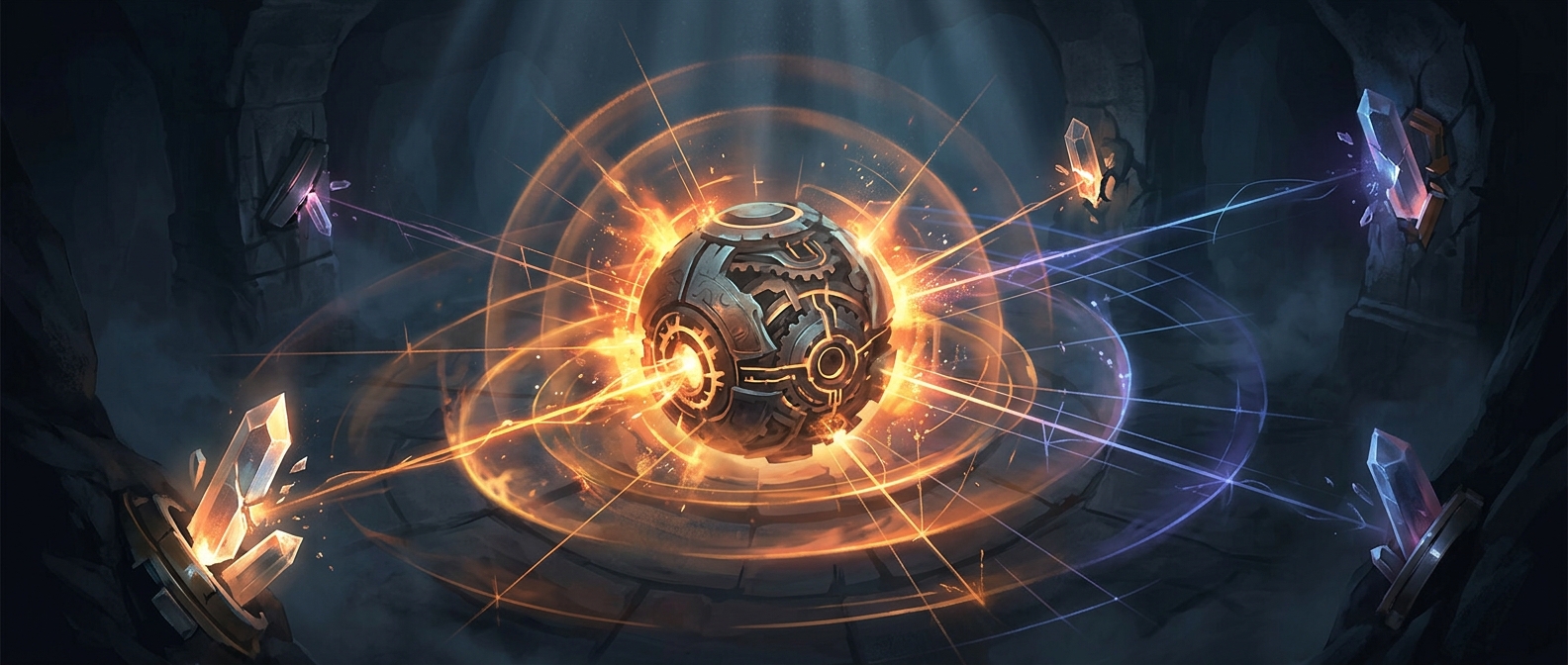
Splash damage relies entirely on distance vectors
Explosions in virtual spaces are just invisible expanding spheres performing vicious algebra on everything inside them. The further your character's center…
Discover more
Ambient occlusion adds shadows to tiny corners
Basic lighting engines are terrible at figuring out that tight corners should be darker than open walls. Ambient occlusion fakes this by calculating how much…
Discover more
How digital skin bends without crumpling
For a digital arm to bend without crumpling like paper, each point of the model is assigned a percentage of loyalty to nearby bones. When an elbow moves, the…
Discover more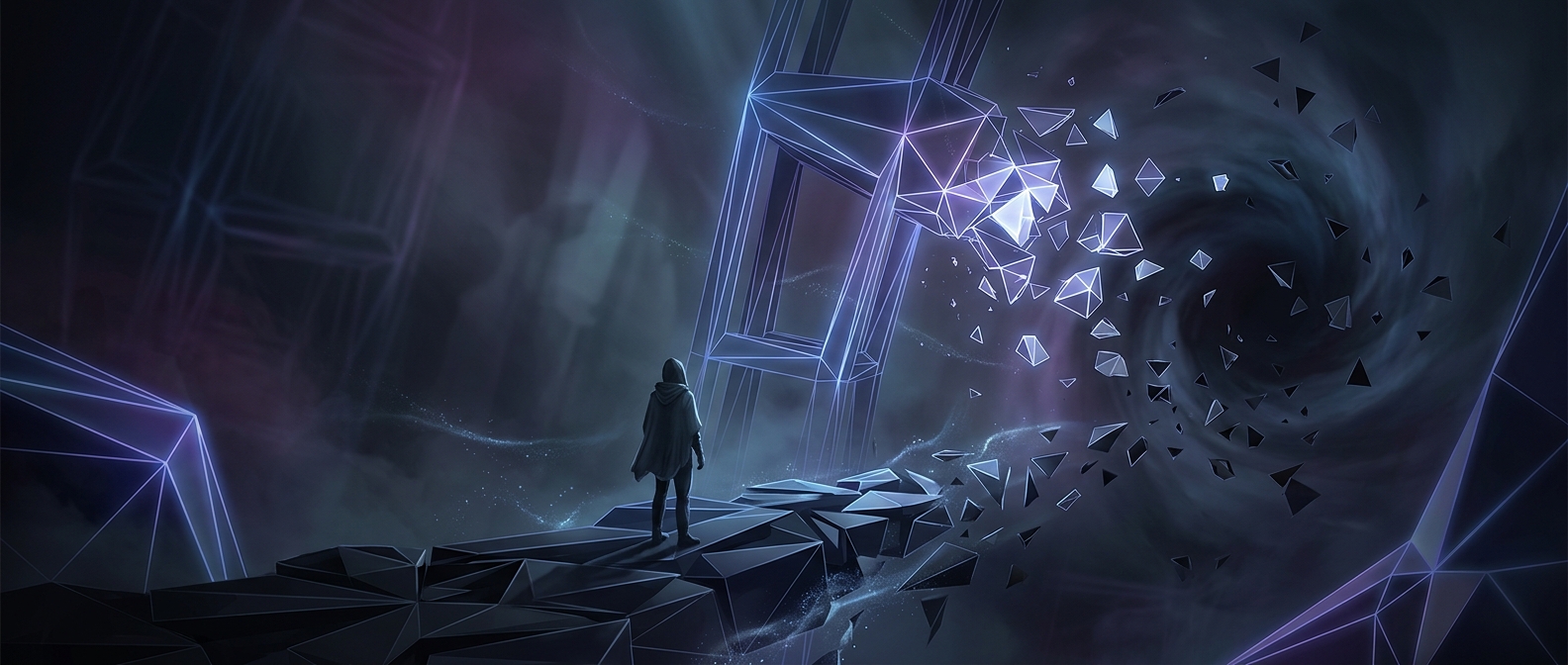
Backface culling deletes inside-out polygons
Every digital triangle has a designated 'front' that the math actually cares about. If you manage to clip your camera inside a virtual object, you see right…
Discover more