Technology
Discover facts about technology. Small discoveries that change the way you see familiar things.
Technology
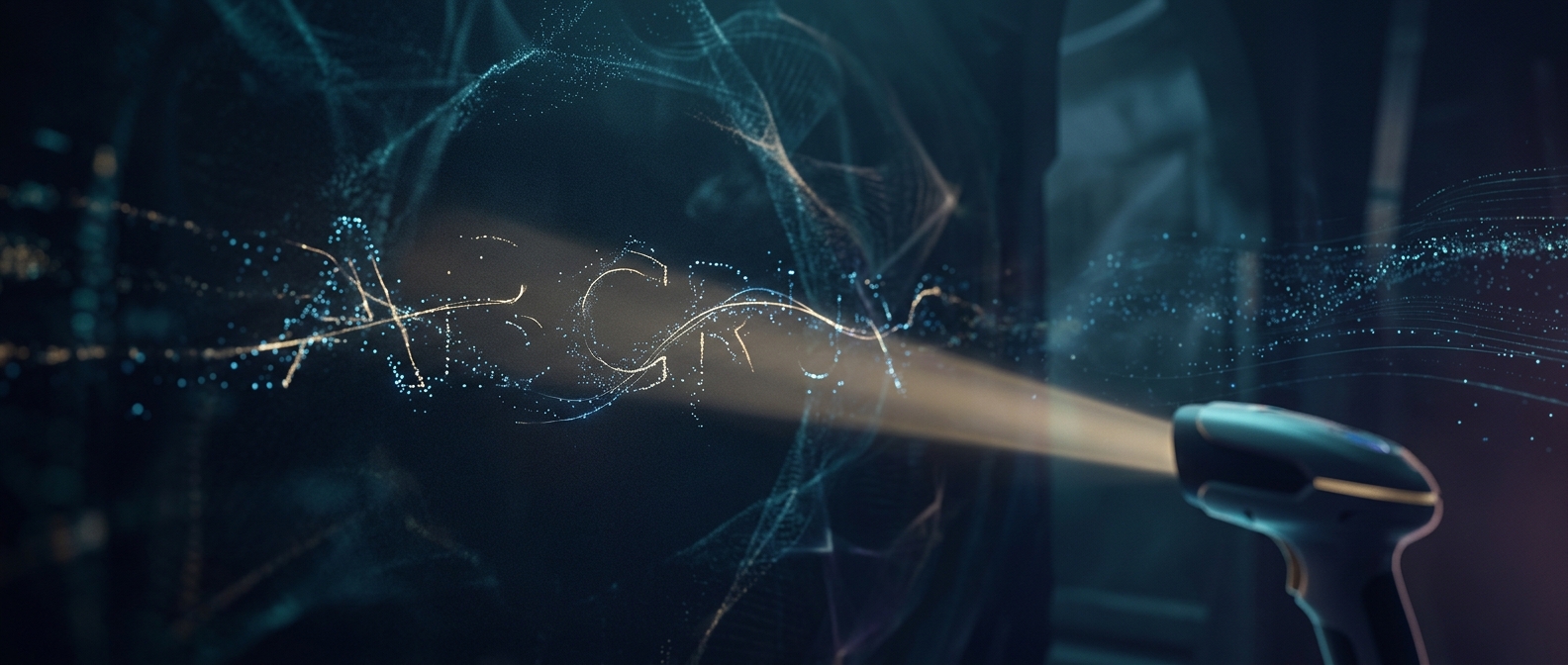
Optical text recognition guesses letters using light edges
Scanners do not actually read. They search for distinct patterns of high-contrast light and dark pixels. When it sees two slanted dark lines meeting at a…
Discover more
How digital assistants learn to speak
Digital assistants do not magically know how to speak. They rely on massive libraries of real voice actors whose words have been sliced into milliseconds of…
Discover more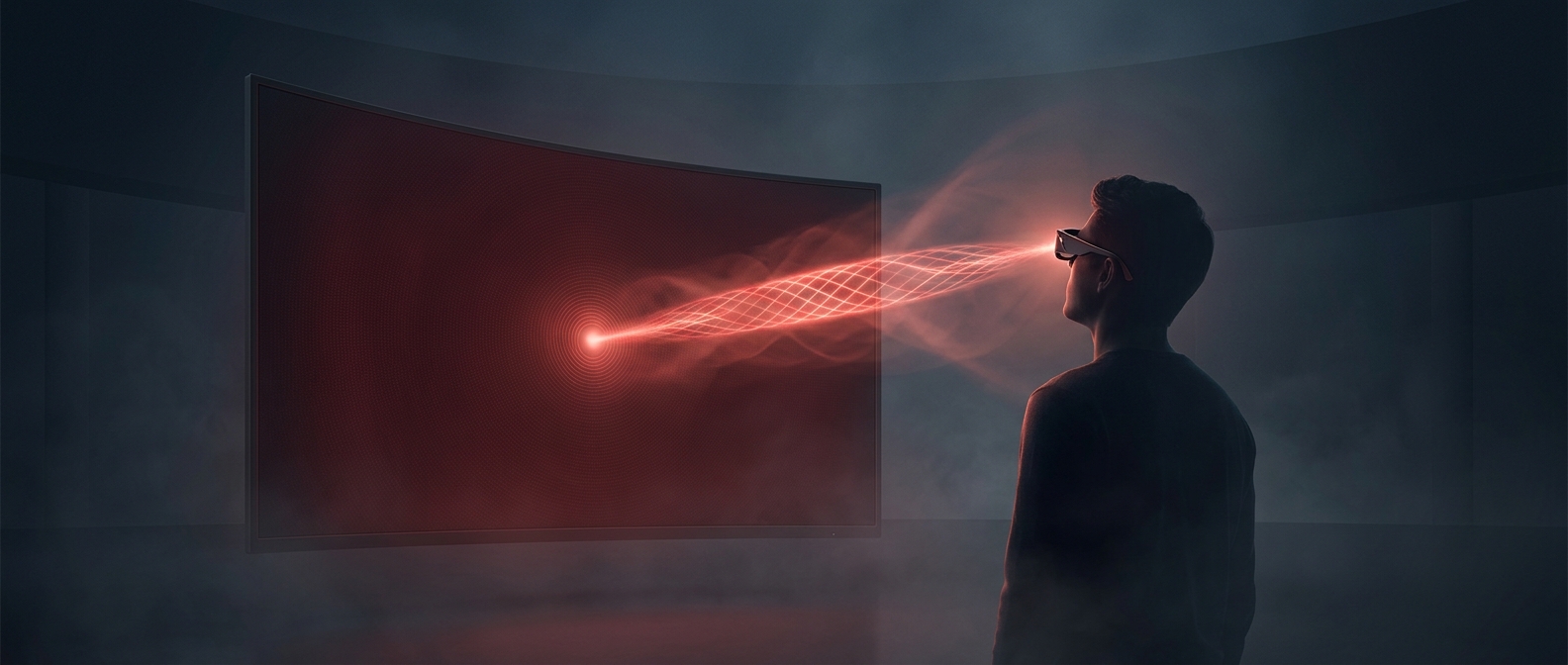
How 3D glasses know when to turn black
Those chunky viewing spectacles communicate constantly with the television. A small infrared emitter pulses hidden signals to the glasses, ensuring the lenses…
Discover more
How eye trackers know where you're looking
To know exactly where you are looking, headsets fire invisible beams directly into your eyes. By measuring the reflection angle off your cornea, the device…
Discover more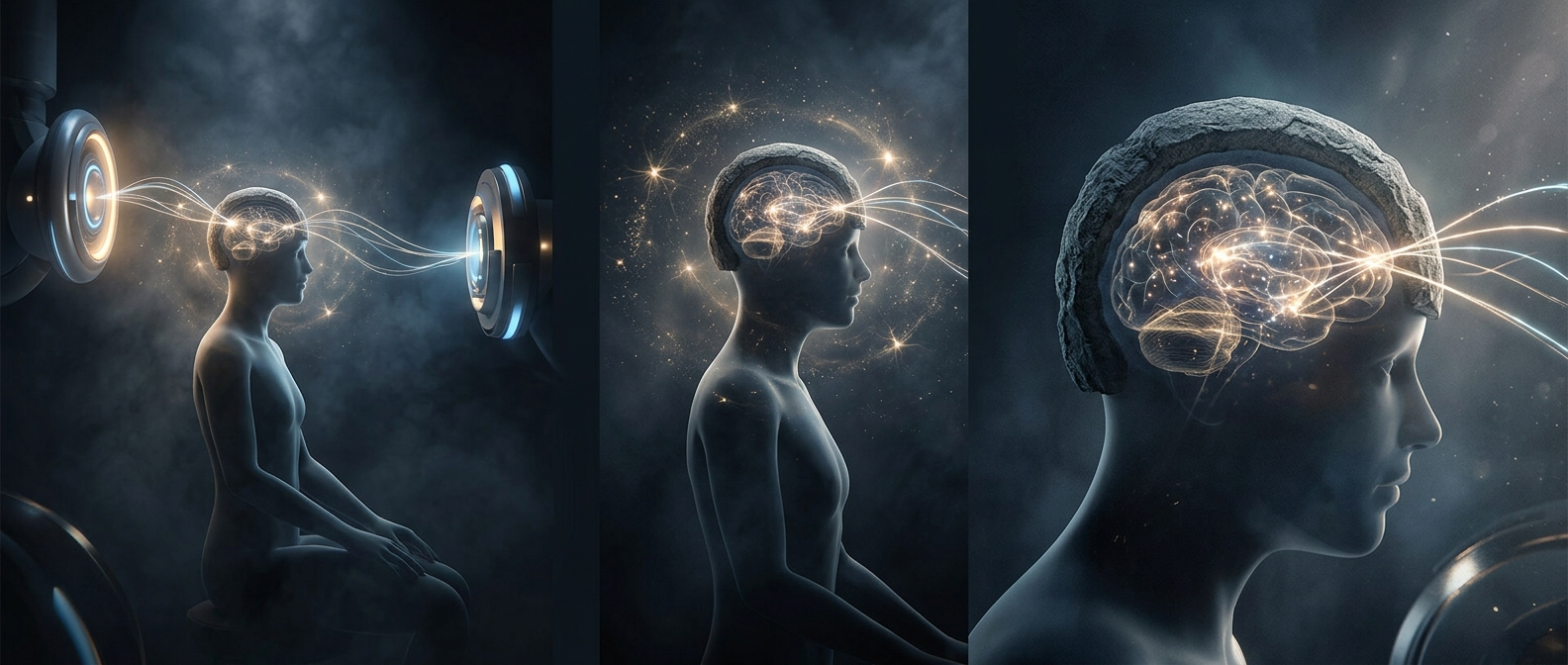
Brain scanners read electrical signals through thick skulls
Your neurons fire tiny electrical voltages every time you think. Electrodes glued to your scalp attempt to detect these microscopic pulses despite the massive…
Discover more
How filmmakers freeze time around an actor
To freeze time while the camera circles an actor, filmmakers construct a massive rig holding hundreds of individual photo lenses. By firing them sequentially…
Discover more STACKY FOR IPHONE
A bigger world.
One discovery
at a time.
Keep discovering with Stacky. Interesting facts in an app that is always within reach.

Hearing aids map incoming frequencies to match deafness
Modern hearing assistance devices do not just make everything louder, because that would be agonizing. Instead, they analyze incoming sound and only boost the…
Discover more
How videos avoid storing every frame
If a movie file saved every single frame entirely, it would be terabytes in size. Instead, encoders only record the exact pixels that move, while aggressively…
Discover more
Invisible walls in video games are transparent solid boxes
When you hit the edge of a game map and stop magically in mid-air, you are just slamming your face against a completely untextured cube. Developers literally…
Discover more
High dynamic range blends bright and dark photos together
Cameras cannot capture bright skies and dark shadows simultaneously without ruining one or the other. To fix this, your device secretly snaps three identical…
Discover more
Night vision goggles amplify ambient light into a green glow
They cannot see in absolute darkness. These devices gather scattered photons from stars or distant streetlights, convert them into electrons, multiply them…
Discover more
Why digital bodies flop without twisting apart
When an enemy falls down a flight of digital stairs, it looks chaotic but is governed by strict math. The limbs are treated as solid cylinders connected by…
Discover more
Your camera guesses colors it never sees
Your incredibly expensive camera is actually colorblind. The sensor only reads light intensity. To get color, a microscopic mosaic of red, green, and blue…
Discover more
Your phone guesses the next word
When your phone suggests the perfect reply, it possesses zero understanding of context or human emotion. It is simply running a massive statistical lottery,…
Discover more
Voxel graphics build 3D worlds out of tiny colored cubes
Instead of wrapping flat textures around hollow polygons, voxel engines build objects using solid volumetric blocks, like digital Lego. It allows for…
Discover more
Procedural generation builds worlds using mathematical noise
Infinite game worlds are not drawn by human hands. They are forged by Perlin noise, a mathematical formula that generates smooth, natural-looking randomness.…
Discover more
How MP3s shrink files by removing inaudible sounds
You thought your digital files were just highly efficient? Nah, they just aggressively delete the parts of the track your pathetic human ears cannot register…
Discover more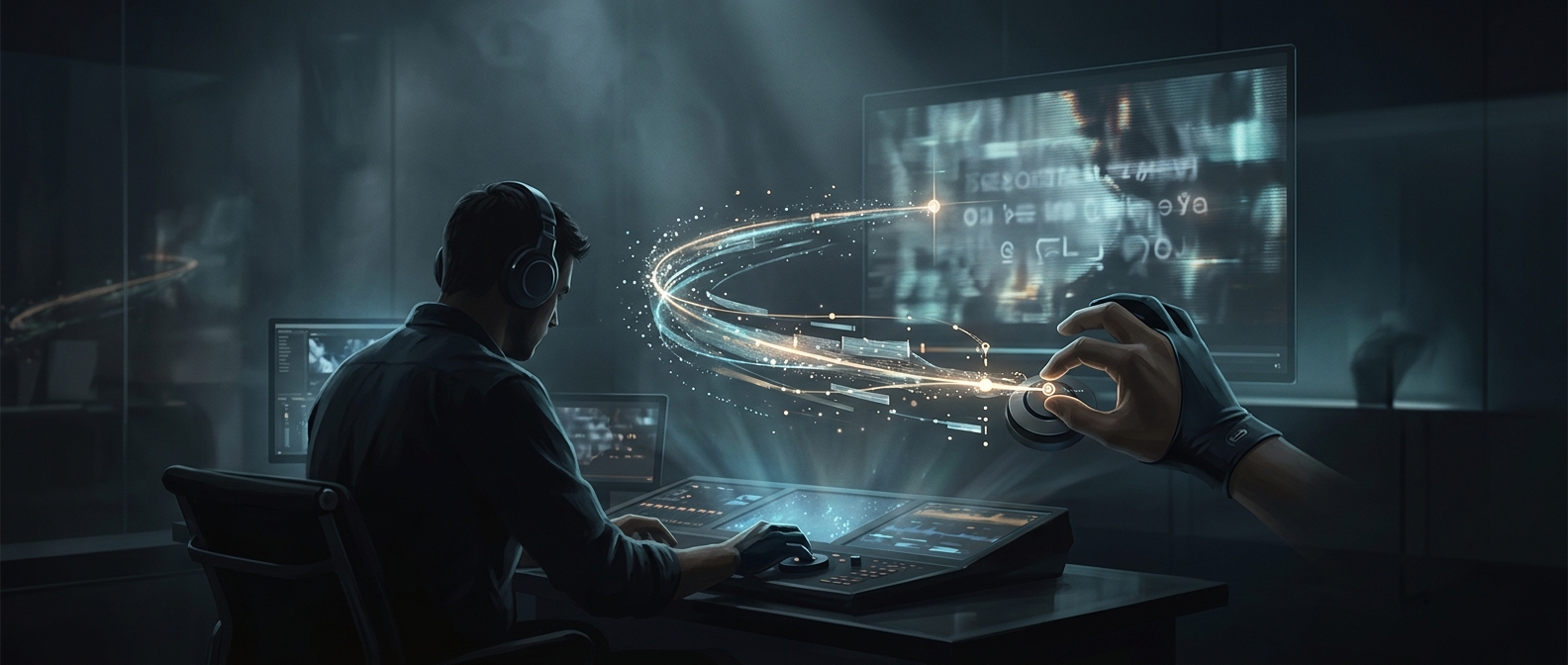
Closed captions are manually timed to sync with video frames
Auto-generated text is garbage, so professional captioners must manually attach text files to exact timestamps in the video track. They spend hours ensuring…
Discover more
Directional mics use side acoustic ports to cancel noise
Shotgun microphones manage to hear conversations across a crowded room by utilizing clever physics. Slits along the sides of the barrel allow off-axis…
Discover more
How video-game characters learn to blink
Without blinking, digital humans look like sociopathic mannequins. To fix this, programmers attach a hidden randomized timer to the eyelids. Every few…
Discover more
Your phone makes a flat screen feel clickable
That satisfying click you feel when typing on a flat screen is entirely a lie. A tiny linear motor vibrates at the exact frequency of a mechanical button…
Discover more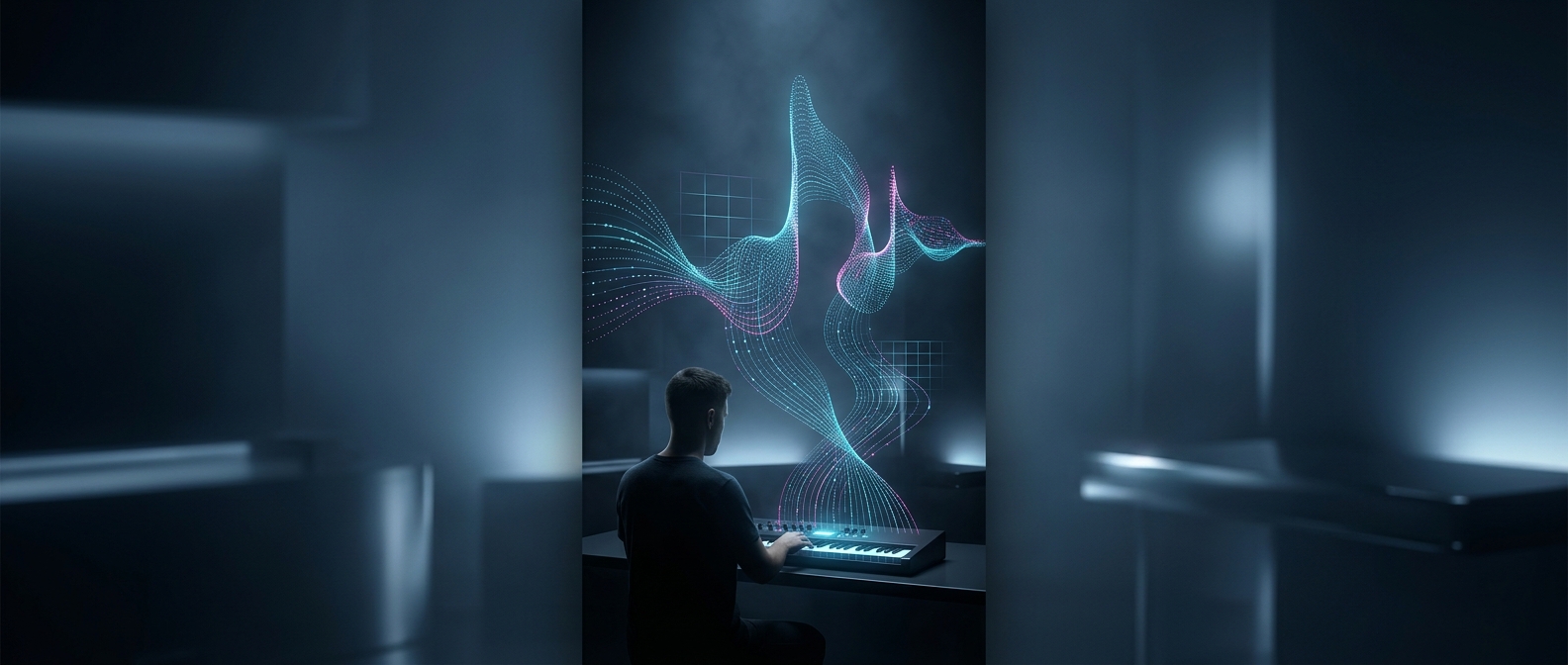
Digital synthesizers generate sound via mathematical tables
There are no strings or hammers inside a modern keyboard. Pressing a key simply triggers an equation that cycles through a stored table of numbers, converting…
Discover more
Camera auto-focus uses phase detection to split light pairs
Before taking a picture, advanced lenses split incoming light into two separate images. The processor then rapidly adjusts the glass until those two…
Discover more
The first endoscope used a burning candle
The very first endoscope, invented by Philipp Bozzini in 1806, was basically just a thin metal tube containing a literal burning candle. Doctors would…
Discover more