Science
Discover facts about science. Small discoveries that change the way you see familiar things.
Science

Ticks glue themselves to you for days
A hard tick anchors barbed mouthparts in the skin, then releases saliva that hardens into a cementlike plug around the bite. That glue helps hold the tick in…
Discover more
Ruthenium makes electrical contacts indestructible
When electrical contacts switch, a tiny arc can scorch their surfaces, gradually pitting them or making them stick. Ruthenium is hard and resists that wear,…
Discover more
Domino chain reactions amplify tiny kinetic energy
The first domino gives the chain a nudge, but gravity funds the rest. As each piece tips, it releases some of its stored gravitational energy and passes…
Discover more
Pluto has water-ice mountains surrounded by flowing nitrogen ice
Pluto’s water ice is so cold and stiff that it can hold up mountain peaks like rock. Nitrogen ice is softer, so it slowly flows around the mountains’ bases…
Discover more
The seismic waves that cannot pass through liquid
An S wave shakes rock sideways, so it needs material that can resist being shoved out of shape. Earth’s liquid outer core can’t hold that sideways strain, and…
Discover more
Swinging pendulums never reach their exact starting heights
On each swing, some of the pendulum’s motion becomes heat and sound as it pushes through air and rubs at its pivot. With less motion left, it can’t climb as…
Discover more STACKY FOR IPHONE
A bigger world.
One discovery
at a time.
Keep discovering with Stacky. Interesting facts in an app that is always within reach.

Why quarks come in flavors like strange and charm
Quark flavor is a physicist’s name for a particle type, not something you can taste. A proton contains two up quarks and one down quark, and that combination…
Discover more
Uranus completely lacks any internal heat source
Uranus does give off heat, but surprisingly little of the leftover warmth from its formation. Neptune, a similarly sized neighbor, releases much more, so the…
Discover more
Lobachevsky created geometry for strictly curved spaces
Lobachevsky’s geometry changes what happens when space is curved. In a negatively curved space, you can draw more than one line through a point that never…
Discover more
A fly's buzz is its flight machinery becoming audible
Rapid wingbeats create pressure changes in the air that you hear as a buzz. The pitch varies with species, wingbeat rate, and flight conditions rather than…
Discover more
Your nose recognizes smells like combinations of notes
A smell activates a pattern across different kinds of receptors rather than one dedicated detector for each odor. The brain reads that combined signal. A…
Discover more
The axiom of choice lets math defy intuition
Banach–Tarski sounds like a recipe for doubling a ball, but its “pieces” are wildly scattered sets of mathematical points, not chunks you could cut with a…
Discover more
Bovine digestion relies entirely on ruminal microbes
A cow cannot break down tough grass fibers on its own, so microbes in its rumen do the job by fermenting them. The cow then digests the microbes and the…
Discover more
Perfume can contain a chemical that smells like poop
Perfume can use skatole, a molecule also made by gut bacteria, because scent depends on how much reaches your nose. A strong dose smells fecal; a tiny trace…
Discover more
Plasmons act as synchronized electron waves
Light hits a metal and sets many of its mobile electrons swaying together in a coordinated wave called a plasmon. Those electrons absorb or reflect particular…
Discover more
Why some cats ignore catnip
Catnip’s active chemical, nepetalactone, sets off a response only in cats sensitive to it. Sensitivity varies, and many kittens are too young to react yet. So…
Discover more
Mount Ruapehu's crater lake is hot and acidic
The danger is that the crater rim may not hold the lake back. If the barrier weakens, hot, acidic water can surge downhill carrying ash and debris, turning…
Discover more
Why golden rectangles survive every cut
A golden rectangle has a neat disappearing act: remove a square whose side equals the rectangle’s short side, and the leftover rectangle is still golden. Its…
Discover more
How one tree can grow two kinds of fruit
Grafting joins a lemon branch to a bitter-orange tree, letting water and nutrients pass through the joined tissues. But the branch keeps its own genes, so it…
Discover more
Why a virus is named after poison
The name “virus” began with the Latin word for poison or venom. It was applied to disease back when people hadn’t yet discovered that microbes cause…
Discover more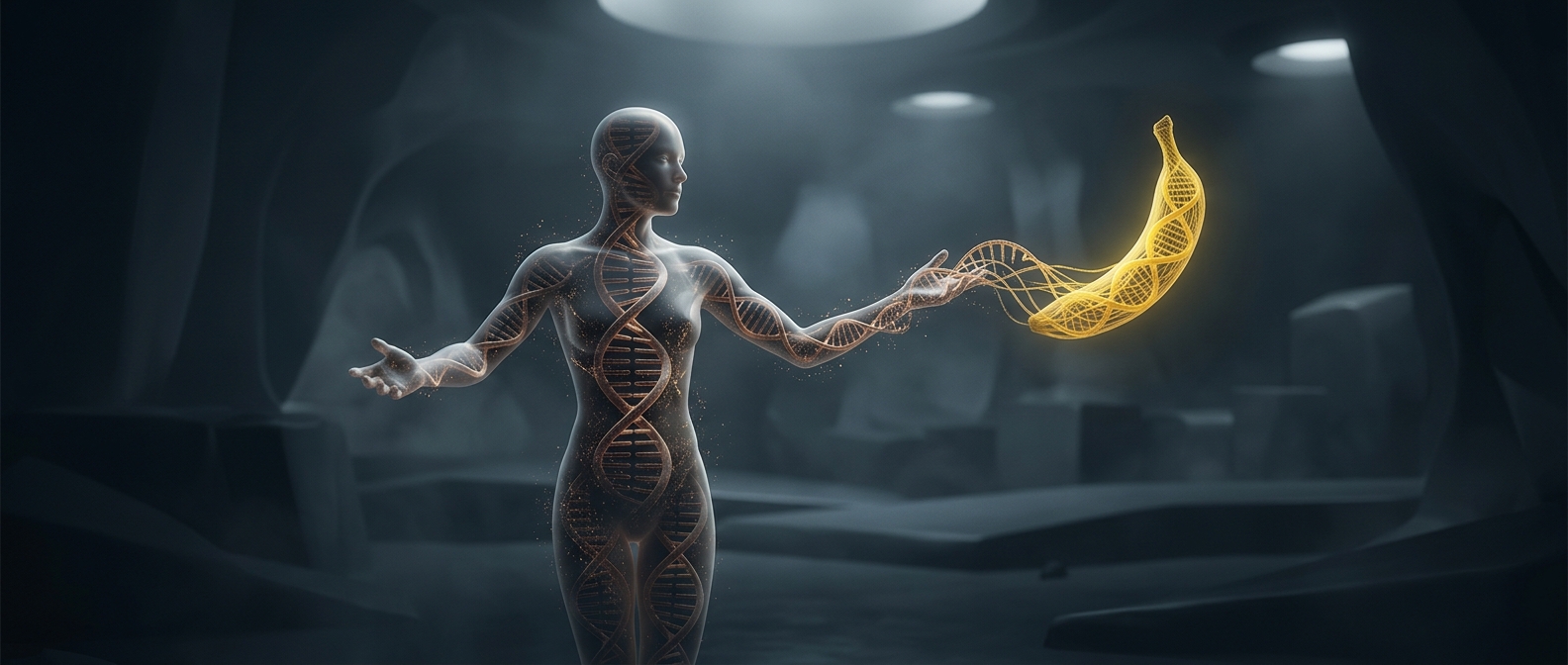
Why humans share so much cellular machinery with bananas
People and bananas share basic cellular machinery because the tools for copying DNA and controlling cell division evolved early in life’s history. Many…
Discover more
Pikas let bitter winter food mellow in storage
A 1997 study found that pikas stored plants rich in defensive chemicals and delayed eating them as those compounds declined. The chemically rich plants also…
Discover more
Sign languages aren't just spoken languages in disguise
In ASL, a signer can establish two people in different spots in the signing space, then move a verb between those spots to show who acts on whom. The hands…
Discover more
Dampers actively dissipate excessive kinetic energy
When a car bounces, its damper forces oil through narrow openings. The squeezed flow resists the motion and turns some of its energy into heat, so the car…
Discover more