Science
Discover facts about science. Small discoveries that change the way you see familiar things.
Science

Quicksand is more ordinary than movies suggest
Quicksand is loose grains mixed with water, not a bottomless hole waiting to swallow someone whole. The slurry can trap a leg and make pulling free difficult,…
Discover more
The chowder so thick it barely feels like soup
Potato starch helps hold the liquid in thick chowder together, while generous clams pack each spoonful with solid pieces. The result can feel almost…
Discover more
Viroids are entirely naked nucleic acids destroying flora
A viroid is a short loop of infectious RNA with no protein coat—and no instructions for making proteins. It slips into a plant cell and hijacks the cell’s…
Discover more
How heat can turn into deafening sound
Rapid heating makes gas inside a tube expand and push out a pressure wave. If that wave bounces through the tube in step with the continued heating, each…
Discover more
Plant roots navigate soil obstacles using sheer touch
A root tip doesn’t need eyes to get around a rock; touching it is enough. The contact changes how the two sides of the root grow, so one side lengthens more…
Discover more
The day Kentucky rained chunks of meat
A startled vulture can bring up its food, so a flock flying over Kentucky could, in theory, have dropped the chunks people described as falling meat in 1876.…
Discover more STACKY FOR IPHONE
A bigger world.
One discovery
at a time.
Keep discovering with Stacky. Interesting facts in an app that is always within reach.

The moss that comes back after drying out
Moss can dry until it looks like a brown scrap, with its cells’ activity mostly paused. Add water and the cells rehydrate and get back to work, bringing the…
Discover more
Nashville cooks aggressively weaponize chicken with cayenne
Capsaicin in cayenne activates nerve receptors that usually warn your brain about dangerously high temperatures. Your brain reads the signal as burning, even…
Discover more
Some microbes live in hot acid that would wreck our cells
Sulfolobus species thrive in hot, acidic environments using proteins and membranes suited to those conditions. Heat that unfolds many ordinary proteins does…
Discover more
A king wrote a book arguing that witches were real
James VI of Scotland published Daemonologie in 1597, defending belief in witchcraft and the prosecution of witches. The author later became James I of…
Discover more
The American sandwich made with fried cow brains
This sandwich follows a simple sequence: flatten the cow brains, dip them in batter, fry them, and serve them on a bun. A hamburger’s architecture, but with a…
Discover more
Balut: the egg that contains a tiny duck
A balut is boiled with a developing duck embryo inside, but the embryo’s stage varies. The longer the egg has incubated, the more features—such as bones and…
Discover more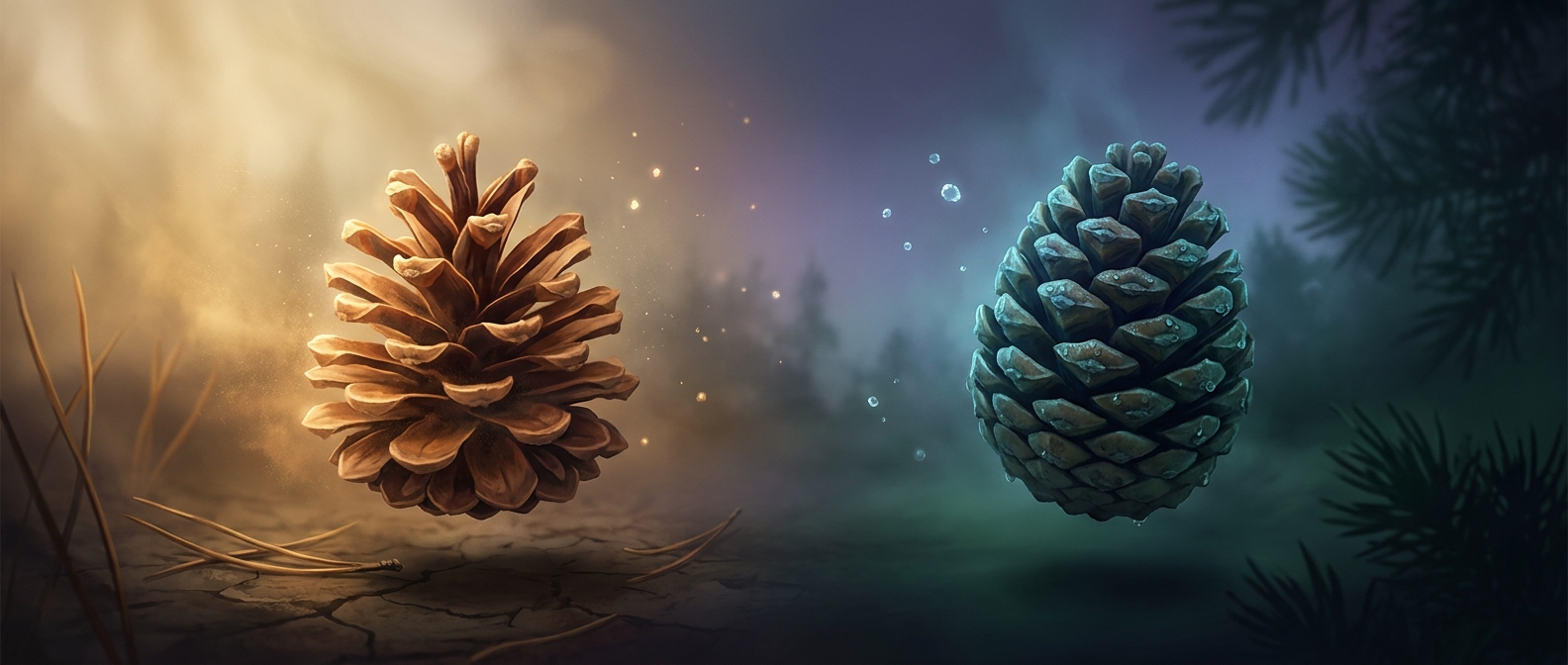
Why pine cones open and close
A pine cone doesn’t need to be alive to open and close. Its scale layers respond differently to moisture: dampness bends them shut, while drying makes them…
Discover more
Boiling points drop drastically at high elevations
Boiling is a pressure contest: water vapor has to push hard enough to make bubbles despite the air pressing on the surface. Up a mountain, there’s less air to…
Discover more
Boron acts as a crucial flux in basic glassmaking
When one part of glass heats and expands while another stays cool, the uneven pull can crack it. Boron lowers how much borosilicate glass expands as it warms,…
Discover more
The metal that loses its magnetism at room temperature
Gadolinium can be strongly magnetic below about 20°C, but near ordinary room temperature its atoms stop staying aligned as well. Heat jostles them out of…
Discover more
Silver tarnishes by bonding with airborne sulfur
Silver tarnish isn’t dirt sitting on the metal: sulfur in the air reacts with silver to make dark silver sulfide right on its surface. Polishing removes that…
Discover more
A feather shuttlecock has a surprisingly strict specification
Badminton's rules specify sixteen feathers, their length, the diameter of their circle, and a narrow weight range. Those limits help make the shuttle's…
Discover more
Ruthenium acts as an exceptional metallic hardener
In platinum and palladium alloys, ruthenium gets in the way of the atomic layers that would otherwise slide under force. That extra resistance makes the metal…
Discover more
Ytterbium behaves curiously like an alkaline earth metal
Most lanthanides commonly lose three electrons, but ytterbium has a relatively accessible two-electron option. Losing those two gives it a +2 charge, a…
Discover more
Lutetium is the hardest and densest lanthanide element
A small block of lutetium can weigh a lot because its heavy atoms crowd into little space. That doesn’t explain its hardness, though: hardness is what you…
Discover more
Final Fantasy VII was once a noir detective story
Before it became a sprawling role-playing game, Final Fantasy VII was imagined as a hardboiled detective story in a fictional New York. That early plan left a…
Discover more
Why the marathon is 26.2 miles
The 26.2 miles weren’t handed down from ancient Greece; they came from a 1908 Olympic route. Organizers set the start at Windsor Castle and the finish by the…
Discover more
Niobium pairs with titanium to create powerful magnets
An MRI’s niobium-titanium coil is chilled until it can carry current with almost no electrical resistance. The current keeps circulating after the coil is…
Discover more