Technology
Discover facts about technology. Small discoveries that change the way you see familiar things.
Technology

Lorentz forces accelerate ionized gas for deep space travel
Why use fire when you can use electromagnetic bullying? A magnetoplasmadynamic thruster turns gas into plasma, which is highly conductive. By running a…
Discover moreWhen drones mistake harmless objects for threats
Giving a flying robot a camera is great until it decides a mailbox is a tactical threat. Autonomous targeting systems struggle significantly with varying…
Discover more
How bulletproof glass stops a speeding bullet
Stopping a speeding metallic projectile requires compromise. Hard exterior glass aggressively shatters to deform the incoming round and drain its initial…
Discover more
Why early gas stoves scared people
Adopting the modern kitchen range took decades because people were terrified of a blue flame. In brightly lit rooms, early gas burners were nearly invisible,…
Discover more
Early barcode scanners needed almost a whole room
Because identifying a can of soup apparently required industrial-level floor space. The earliest grocery store scanners in the seventies were massive, heavy…
Discover more
Orbiting internet transmitters drastically reduce latency
Pinging a massive satellite located thousands of miles deep in space aggressively creates a completely agonizing delay in your connection. Companies are now…
Discover more STACKY FOR IPHONE
A bigger world.
One discovery
at a time.
Keep discovering with Stacky. Interesting facts in an app that is always within reach.

The helicopters that eject their own rotor blades
Bailing out of an aircraft is fine unless there is a giant blender blade spinning directly above your head. To solve this minor oversight, specialized…
Discover more
Shoelace tips were once made of glass
The tiny tips on your shoelaces have a bizarrely glamorous and dangerous past. Before plastic dominated the globe, these tips were made of actual glass,…
Discover more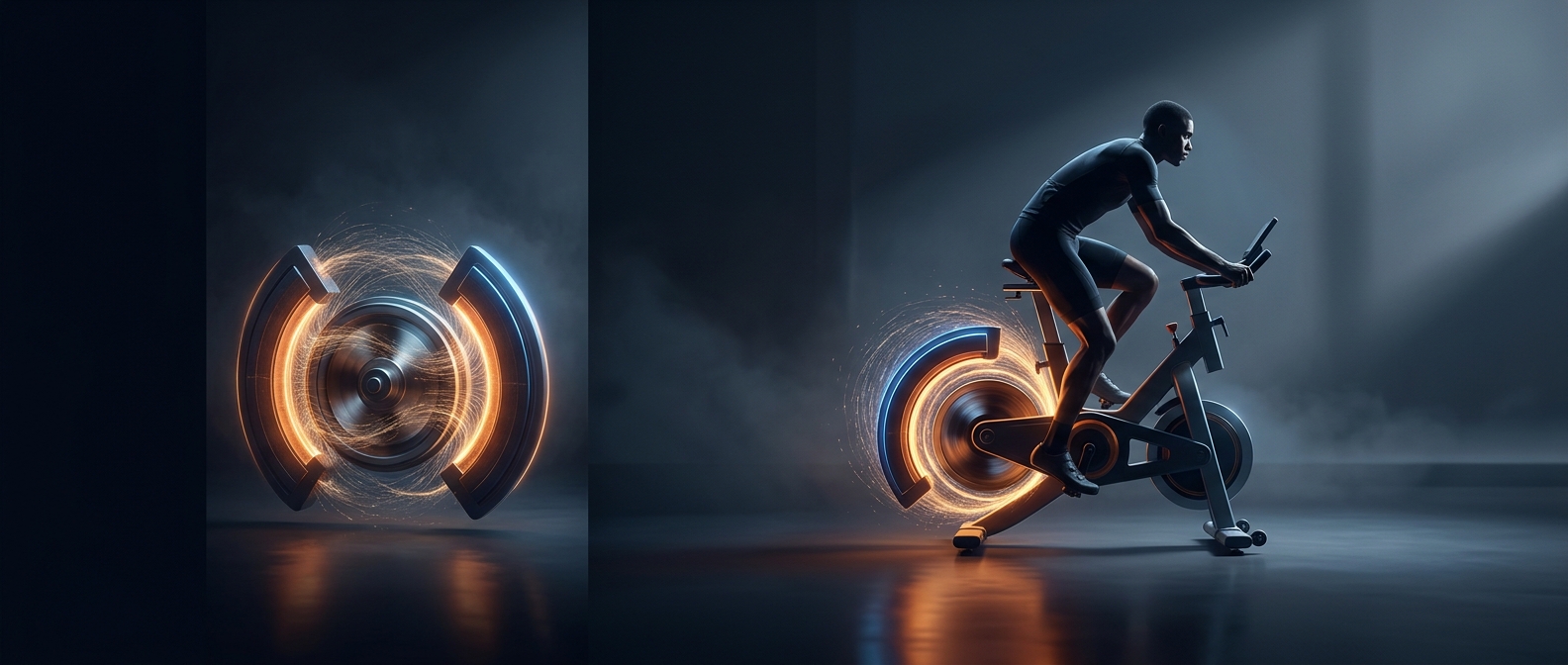
Why stationary bikes still feel like a headwind
Since you aren't actually fighting wind or hills, the machine just artificially tortures you. A giant metal flywheel spins near strong magnets, and turning up…
Discover more
Why your laptop overheats on your lap
Calling it a portable lap computer is a fundamental engineering lie. Placing the main cooling intake directly on the bottom chassis guarantees that actually…
Discover more
Electrocardiograms measure voltage changes in heart muscle
Your aggressively beating heart is essentially a sloppy, wet electrical generator, and these sticky little pads are just eavesdropping on the minute voltage…
Discover more
How compressed air makes both hot and cold streams
Firing compressed air into a specifically shaped tube causes a bizarre thermodynamic split. The air is forced into a violent cyclone; the outer layers of the…
Discover more
Gamers run spy networks and political coups
Inside heavily populated sandbox universes, bored players routinely establish incredibly complex hierarchies complete with spies, diplomats, and traitors. The…
Discover more
Hyper-threading splits physical cores into virtual ones
Because hardware is expensive, engineers figured out how to trick the operating system into seeing double. Hyper-threading takes a single physical processor…
Discover more
Why clocks move the way sundial shadows do
Digital displays owe their layout to dirt and shadows. In the Northern Hemisphere, a sundial's shadow moves from left to right. If early horologists lived in…
Discover more
Why your internet slows down at peak hours
Paying for premium gigabit connectivity heavily implies a flawless, uninterrupted pipeline of endless bandwidth. During prime evening viewing hours, your…
Discover more
Why email's BCC is called a carbon copy
If CC is carbon copy, BCC is its infinitely sneakier cousin. It stands for Blind Carbon Copy, carrying over the mid-century office practice of creating a…
Discover more
Ancient Romans used combination locks too
The frustrating mechanism securing your high school locker is surprisingly ancient. Archeologists have discovered that ancient empires utilized rotating rings…
Discover more
Caps Lock began as a typewriter shortcut
Internet shouting wasn't born out of rage, it was born out of mechanical laziness. Early typewriters required you to hold down a heavy shift key to physically…
Discover more
Why Winamp said it whipped a llama
If you listened to MP3s in the early 2000s, you were greeted every single time by an aggressive voice declaring that the software 'really whips the llama's…
Discover more
Why retro games looked better on old CRT screens
Prepare to have your pixel-art nostalgia completely shattered. Those gorgeous retro graphics actually looked like blocky trash before being smeared across the…
Discover more
Steam engines are giant kettles pushing pistons
We revere the dawn of the industrial revolution, yet the core mechanic is laughably simple. A roaring coal fire aggressively boils a massive tank of water,…
Discover more
Trollface started as a Microsoft Paint doodle
The defining face of internet mischief wasn't designed by a brilliant marketing firm or a professional artist; it was furiously scribbled in a basic painting…
Discover more
That check-engine light might mean a loose gas cap
Before you mentally prepare for a massive mechanic bill, realize your dashboard is just deeply dramatic. That ominous glowing indicator is frequently…
Discover more