Transport
Discover facts about transport. Small discoveries that change the way you see familiar things.
Transport

When sheep carried supplies over mountain cliffs
Steep mountain paths leave no room for carts, but sheep can carry loads along narrow trails on pack saddles. They turn otherwise hard-to-reach routes into a…
Discover more
Oxen are entirely steered using vocal commands
Oxen take direction from familiar calls: a teamster shouts cues for turning, stopping, or moving, and the trained animals follow. No reins required—just a…
Discover more
How spacecraft find a parking spot in space
At certain Lagrange points, gravity and orbital motion balance, allowing a spacecraft to stay in roughly the same position relative to two larger bodies with…
Discover more
Why you can't safely ride an alpaca
An alpaca’s back and legs are built for carrying its own body, not a person’s weight. Riding one risks injury, so the animal that looks like a fluffy pony is…
Discover more
Why zebras never became domesticated horses
Horses were bred over generations to tolerate people handling and directing them; zebras stayed wild, with a strong flight response and a formidable bite.…
Discover more
Yaks comfortably transport gear at high altitudes
Yaks are built for cold, thin air: thick coats conserve warmth, and broad feet grip rough ground. They carry supplies where wheeled vehicles struggle, serving…
Discover more STACKY FOR IPHONE
A bigger world.
One discovery
at a time.
Keep discovering with Stacky. Interesting facts in an app that is always within reach.
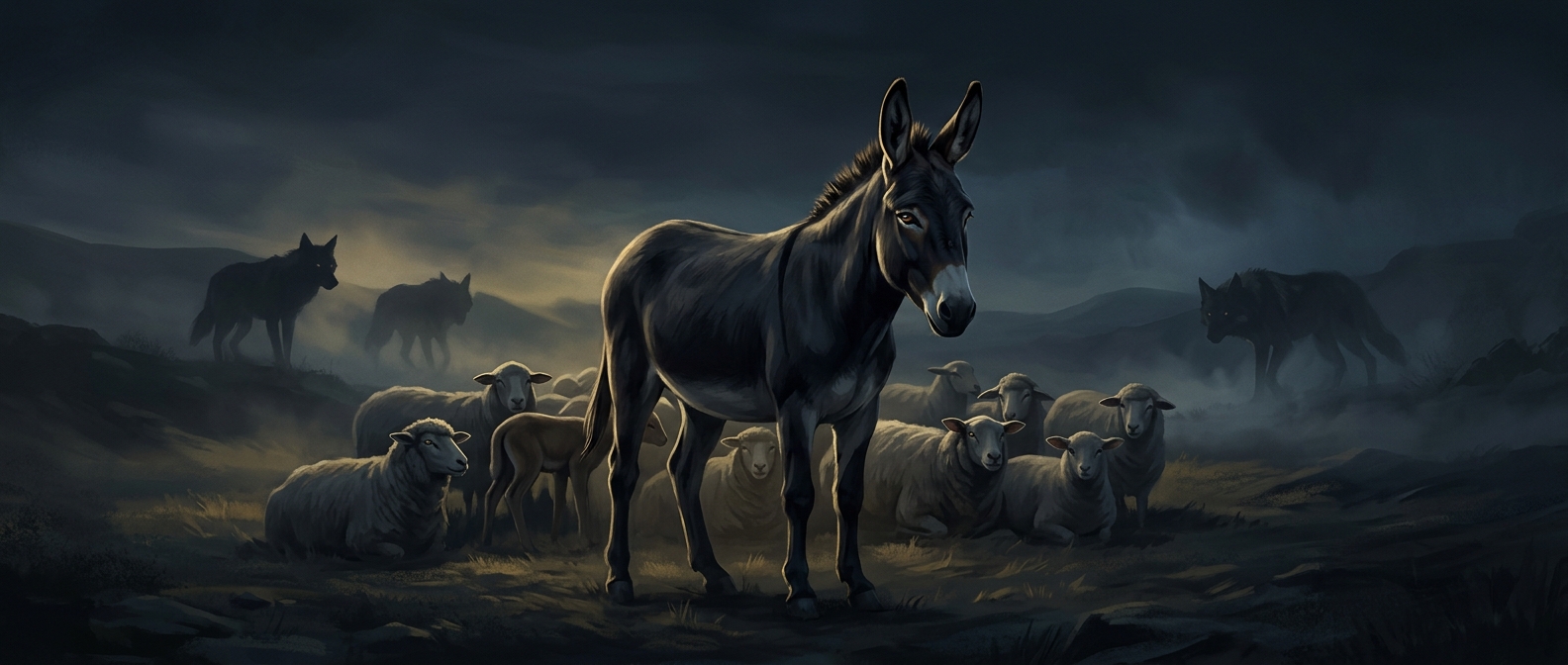
Why farmers use donkeys to guard sheep
Donkeys guard by confronting threats: they bray, chase, and kick at predators that approach the flock. A sheepdog herds from behind; the donkey posts up like…
Discover more
Why braking can help you catch up in orbit
A chasing spacecraft can first slow itself to enter a lower orbit. That lower path takes less time to circle Earth, letting it gain on a target ahead before…
Discover more
Why rockets need the gas in party balloons
Helium—the gas that lifts party balloons—also pressurizes rocket propellant tanks. As fuel drains, helium pushes the remaining liquid toward the engines; its…
Discover more
Mules are completely sterile hybrid offspring
A mule inherits one set of chromosomes from a horse and another from a donkey. The mismatched total doesn’t pair neatly when reproductive cells form, so the…
Discover more
Reindeer herds migrate thousands of miles yearly
Reindeer follow seasonal food across huge stretches of Arctic land, moving between feeding grounds as conditions change. Their annual commute makes a human…
Discover more
A conventional solid rocket has no fuel valve to close after ignition
Fuel and oxidizer are already mixed into the solid propellant. Burning progresses through its exposed surfaces rather than depending on a fresh liquid supply…
Discover more
Honda makes far more than cars
Honda builds motorcycles, aircraft, marine engines, and power equipment as well as cars. Its engine business reaches from a lawn mower to a jet, so the…
Discover more
Paris gave its Métro a scent called Madeleine
In 1998, RATP announced a fragrance mixed into cleaning products for stations and corridors. Rather than relying on free-standing perfume diffusers, the plan…
Discover more
Why helicopters can’t simply fly faster
The faster a helicopter flies, the faster its forward-moving rotor blade cuts through the air—and the slower the blade moving backward sees it. That imbalance…
Discover more
An escalator has no departure time to miss
Instead of waiting for a vehicle, riders step onto a continuous stream of moving stairs. That makes escalators useful where large numbers of people need to…
Discover more
White paint remains the most popular color for new vehicles globally because it hides dirt well and reflects sunlight
White reflects sunlight instead of soaking up as much of it, and road dust shows less against a pale surface. The car stays cooler and disguises…
Discover more
NVMe drives use PCIe's high-speed lanes
An NVMe drive sends data through PCIe lanes, the same high-speed paths used by other components, instead of squeezing through older storage connections. The…
Discover more
Smart thermostats send tiny sensor updates through a lightweight messaging protocol
The thermostat publishes a brief sensor update through a broker, and interested apps subscribe to receive it. Small messages keep the exchange lean: the home…
Discover more
Frequency modulation transports audio by squishing waves
FM puts the audio onto a radio wave by nudging its frequency up and down; louder sounds make bigger nudges. The wave’s height stays steady, so the message…
Discover more
Why anyone can fake an email's From address
Email’s From line is a label, not proof of identity. The sending system can fill in that text just as someone can write a false return address on a postcard;…
Discover more
Digital phone transport relies on text based web requests
When an app needs a page or a file, it sends a web request telling a server what it wants. The server sends back the data, and HTTPS encrypts the exchange so…
Discover more
Dynamic host transport assigns temporary IP leases on demand
When a device joins a network, DHCP assigns it an available IP address for a lease. Once the device leaves, that address goes back into the pool. No…
Discover more
How the web gets faster by tolerating lost data
For a live call, a late packet is old news. The system drops it and plays the next one rather than pausing everything for a resend, trading a speck of missing…
Discover more