Science
Discover facts about science. Small discoveries that change the way you see familiar things.
Science

Jack Hills zircons suggest Earth had water 4.4 billion years ago
Earth’s chaotic infancy wasn't just an endless sea of molten lava waiting billions of years to chill out. Tiny, indestructible zircon crystals found in…
Discover more
Roman pollution is frozen in Greenland's ice
You might think human-caused atmospheric ruin started with the Industrial Revolution, but the Romans beat us to it by two millennia. Deep within the Greenland…
Discover more
Neutron-star pasta is stronger than steel
The ultimate Italian dinner exists in the most hostile environment imaginable: the ultra-dense crust of a spinning neutron star. Crushed by gravity billions…
Discover more
Titin proteins unravel like springs under muscle stress
Your muscles don't tear every time you lift something heavy because your proteins act like microscopic bungee cords. Titin is the largest protein in the human…
Discover more
Venus has a wave 10,000 kilometers long
Venus's atmosphere spins violently at hurricane speeds, but somehow, an ocean-sized wave stands completely still in its toxic clouds. Japan's Akatsuki probe…
Discover more
Gold nanoparticles can reveal a single molecule
Staring at a single molecule used to be physically impossible due to the diffraction limit of light, but gold handles the impossible just fine. By placing two…
Discover more STACKY FOR IPHONE
A bigger world.
One discovery
at a time.
Keep discovering with Stacky. Interesting facts in an app that is always within reach.

RNA evolved into a tiny loop that replicated faster
Evolution usually favors complexity, but sometimes being dumb and fast is the superior survival strategy. In the 1960s, geneticist Sol Spiegelman put…
Discover more
Muons make cold fusion possible at room temperature
Physicists realized early on that you don't need the fury of a sun to fuse atoms. You just need fatter electrons. By replacing an electron in a hydrogen…
Discover more
Why flawed diamonds can sense neurons
Flawless diamonds are scientifically useless. Introduce a nitrogen-vacancy center—a literal microscopic hole sitting right next to a rogue nitrogen atom in…
Discover more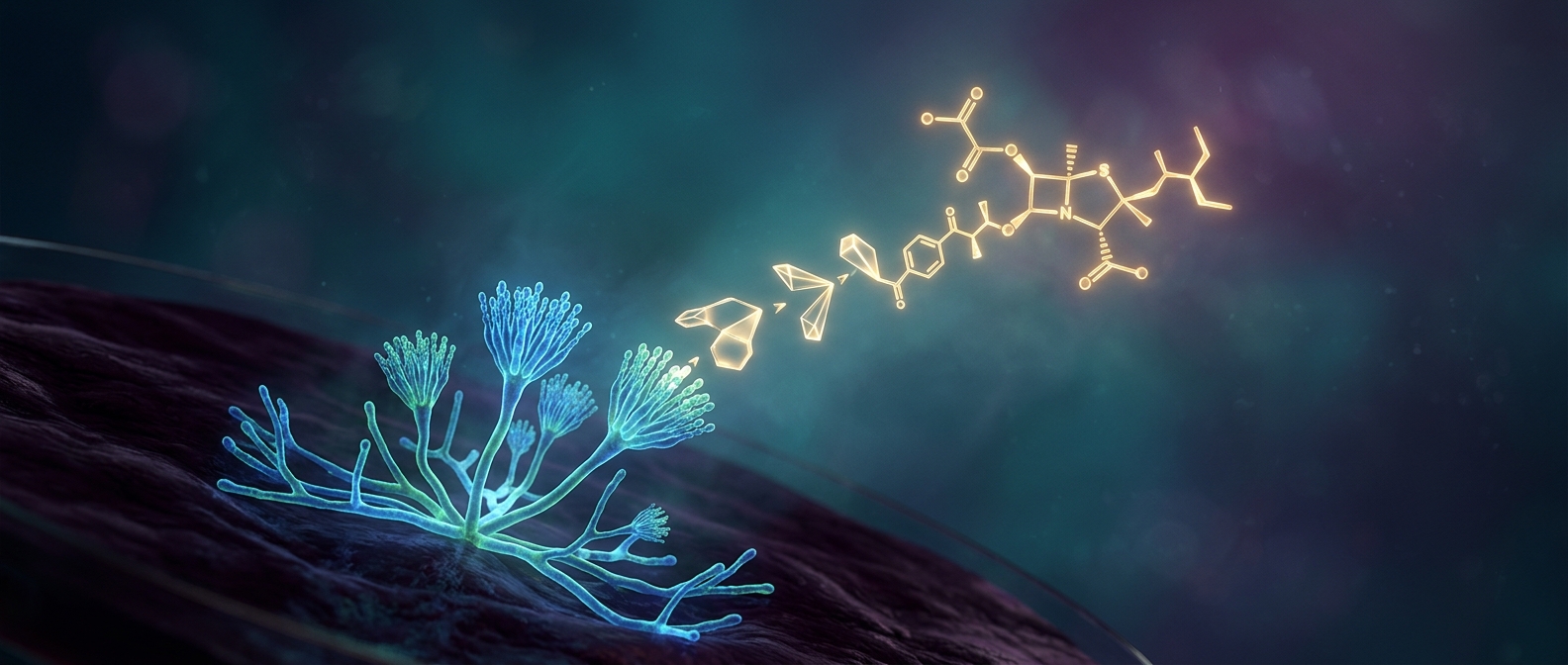
How fungi make antibiotics without ribosomes
You might think all proteins require DNA instructions and ribosomes, but nature's best pharmacists skip that entirely. Fungi like Penicillium synthesize…
Discover more
Why your heart ends up on the left
The only reason your heart is on the left side of your chest is because of millions of microscopic, spinning biological windshield wipers. During early…
Discover more
How scientists retrace Ebola's path across borders
Epidemiologists don't just guess where a pandemic started; they use hardcore math to rewind a virus's family tree. By combining geographic location data with…
Discover more
How X-rays revealed insect brains in amber
Paleontologists are firing high-energy particle accelerators at dinosaur-era amber just to map the internal organs of trapped bugs. Synchrotron…
Discover more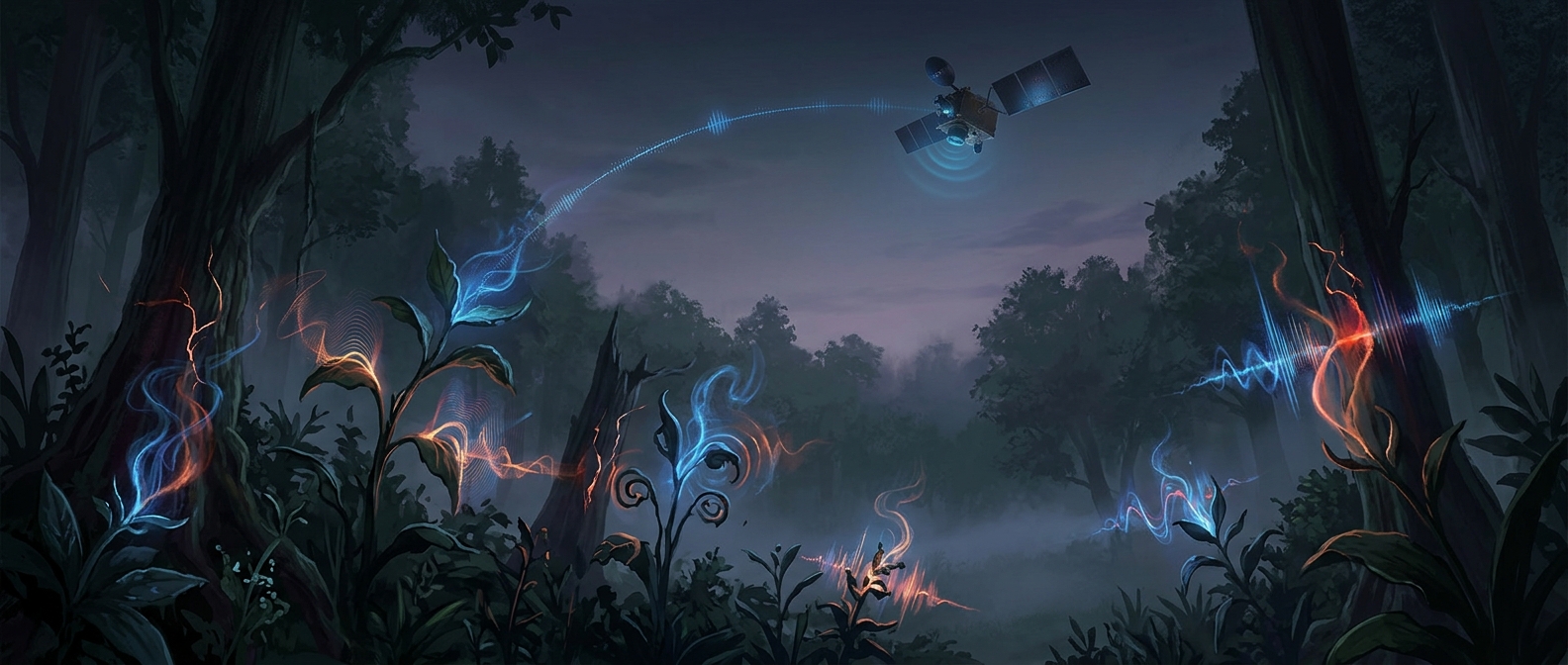
Satellites spot stressed plants before they turn brown
Plants start screaming in infrared long before they actually drop a single brown leaf. By utilizing hyperspectral imaging, which captures hundreds of narrow…
Discover more
Cosmic rays reveal when a rock saw daylight
You can figure out exactly when a rock was carved or exposed to the sky by measuring its sunburn from deep space. Earth is constantly bombarded by high-energy…
Discover more
The bacterium that learned to digest nylon
Textbooks usually describe enzymes as highly specific locks that only accept one perfectly shaped molecular key, but enzymes are actually incredibly…
Discover more
How molecular handedness shapes life
Louis Pasteur discovered that biological molecules have a 'handedness' or chirality, but the wild part is how this microscopic preference snowballs. When…
Discover more
How fossil pollen reveals ancient droughts
Pollen is not just modern allergy fuel; its microscopic armor is made of sporopollenin, a polymer so indestructible it survives deep in the earth for hundreds…
Discover more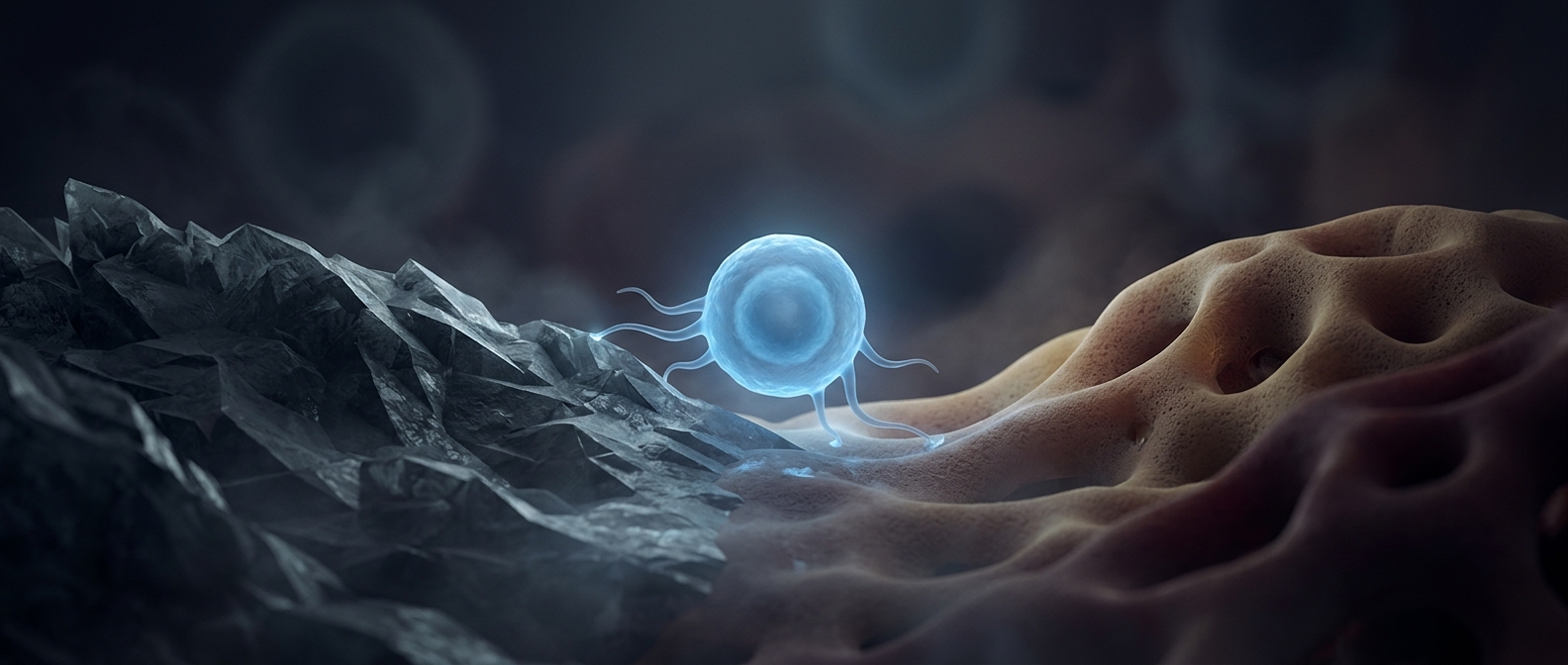
Stem cells can choose their fate by feeling a surface
You might think DNA strictly bosses stem cells around, but these blank-slate cells are actually highly sensitive, touchy-feely architects. If you grow a human…
Discover more
How pine forests help make their own clouds
Trees don't just passively wait for rain; the smartest forests actually build the clouds themselves. The CLOUD experiment at CERN proved that atmospheric…
Discover more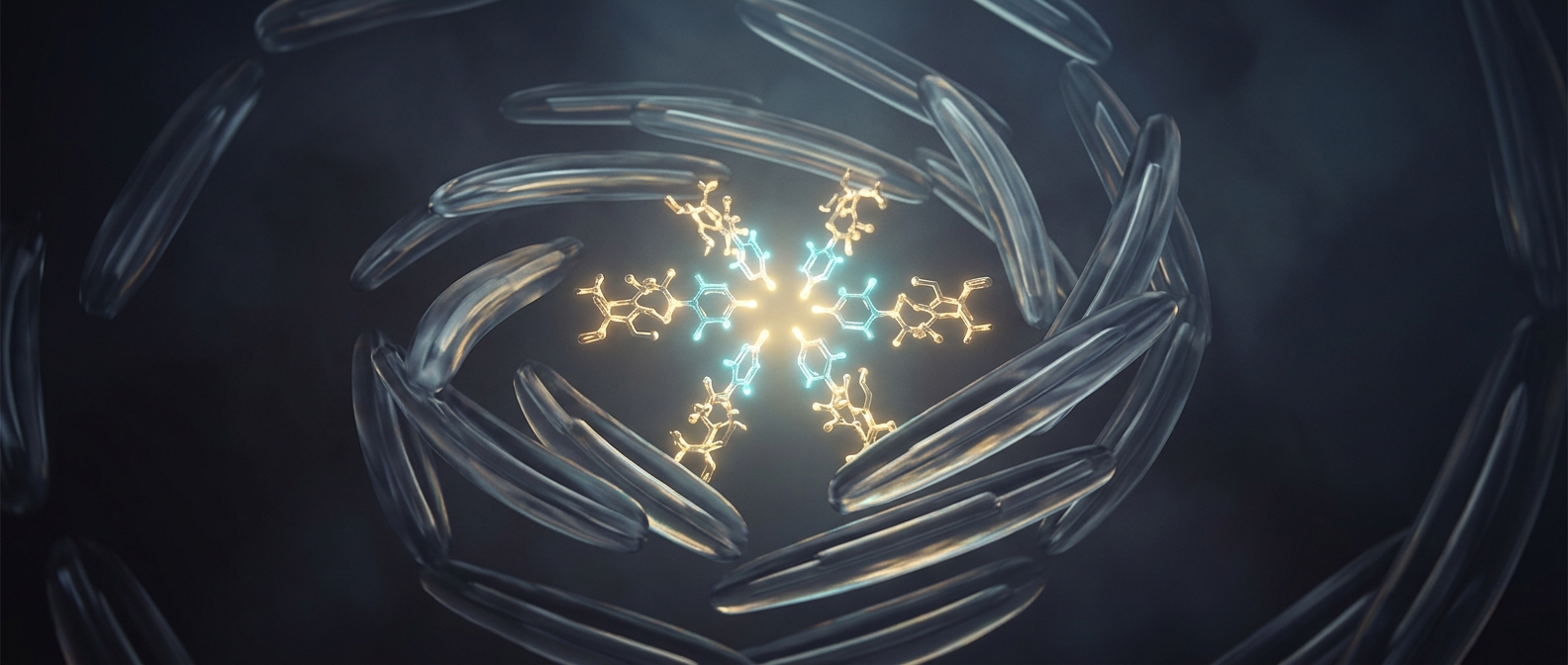
A single molecule can make liquid crystals spin
Building a functional engine out of a single molecule sounds like science fiction until you realize scientists already won a Nobel Prize for it. Bernard…
Discover more
Dying stars make radioactive technetium
The element technetium has no stable isotopes, meaning any trace of it in the universe is a loud, glowing fingerprint of recent cosmic violence. Because…
Discover more
How North Korean posters use color to shape perception
North Korea's Room 39 isn't just about laundering money; they dabble heavily in the science of psychological manipulation. Their retro-chic travel posters…
Discover more
The meteorite people heard before it struck
When the Andijan meteorite decided to aggressively introduce itself to Earth in 1901, it assaulted the eardrums of an entire region. As the space rock hit the…
Discover more