Science
Discover facts about science. Small discoveries that change the way you see familiar things.
Science

Zirconium perfectly mimics expensive diamonds
Cubic zirconia can sparkle like diamond because its crystal handles light in a similar showy way, but it’s a different material: synthetic zirconium dioxide.…
Discover more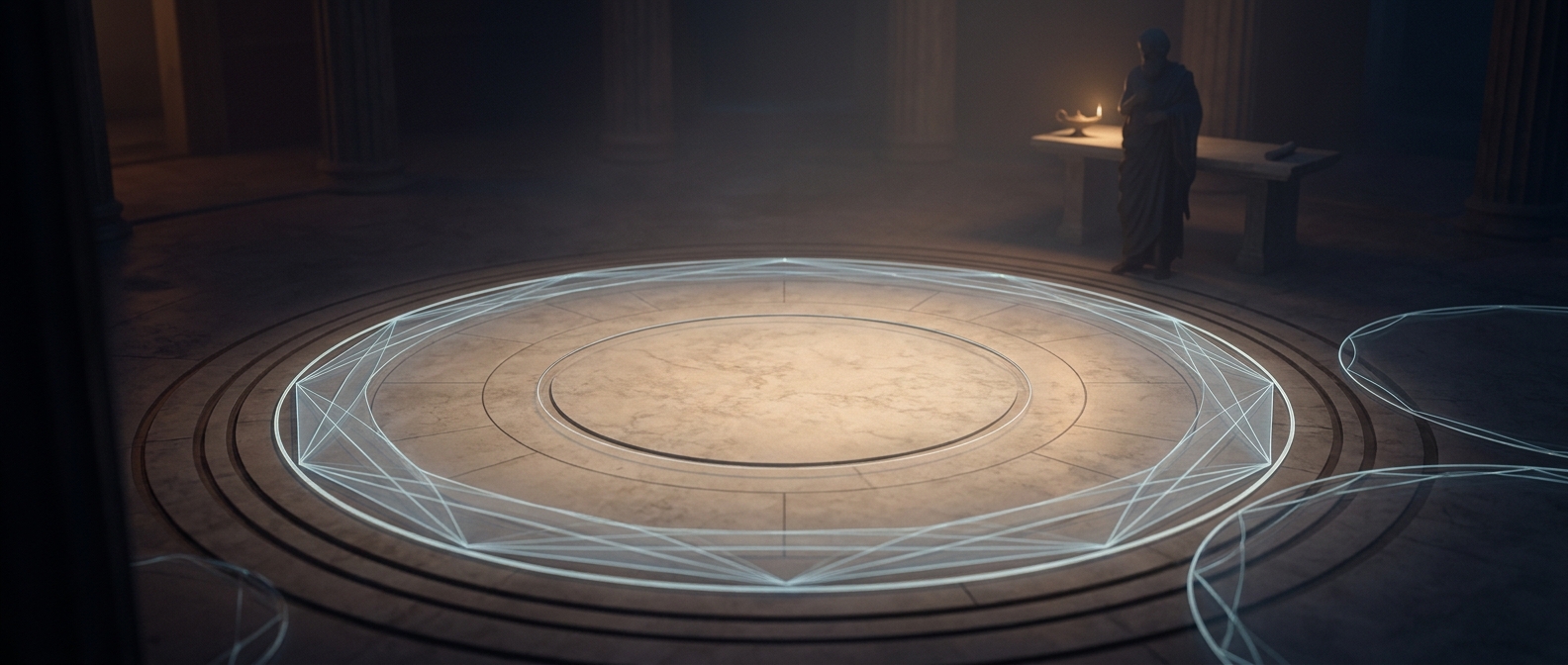
Archimedes used exhaustion to estimate the value of pi
Instead of measuring a circle’s edge directly, Archimedes drew polygons inside and outside it. Their perimeters gave lower and upper bounds for the…
Discover more
Soulmates offer perfectly tailored cosmic romance
The feeling of instant connection may be dramatic; the way two people meet often isn’t. Repeated encounters create more chances to talk, and shared friends or…
Discover more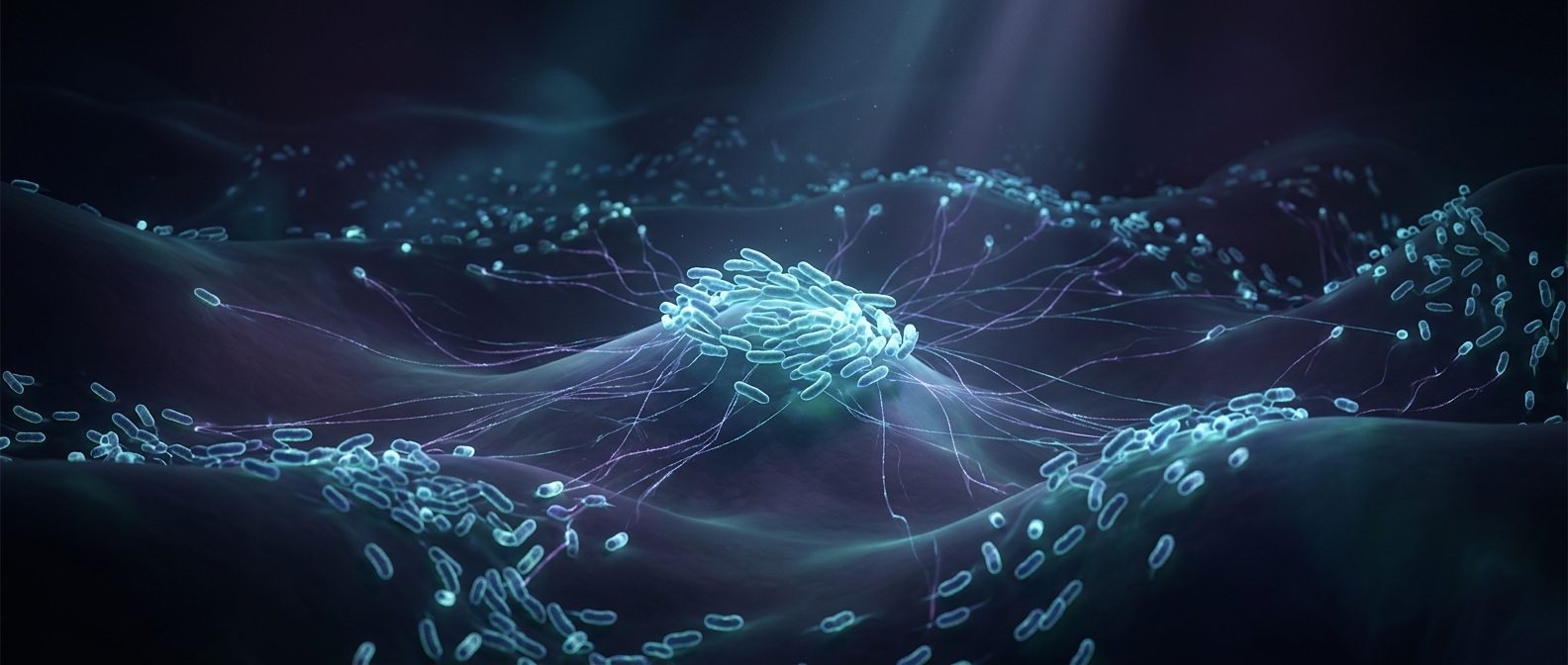
Bacteria can attack as a group
Bacteria release chemical signals, and one cell’s message may be too faint to trigger anything. As more bacteria signal, the chemicals build up until they…
Discover more
Earth's ocean-blue appearance comes from a surprisingly thin layer
Water covers about 71% of the surface but makes up only a tiny share of the planet's mass. Beneath it lies thousands of kilometers of rock and metal. A…
Discover more
Why a jellyfish can vanish on a sunny beach
Sun and sand can dry a jellyfish until little more than a clear-looking film remains. Its stinging cells can still fire even after it dies, so a remnant…
Discover more STACKY FOR IPHONE
A bigger world.
One discovery
at a time.
Keep discovering with Stacky. Interesting facts in an app that is always within reach.

Modern websites completely break without scripting
Turn off JavaScript and a website’s basic HTML may still sit there, like a shop with its walls and shelves but no moving parts. Menus, live updates, and other…
Discover more
Why saber-toothed cats had to bite carefully
The danger wasn’t simply biting hard; it was letting a struggling animal twist those long, relatively slender teeth sideways. Saber-toothed cats likely used…
Discover more
Iridium forms intensely colorful but useless salts
Iridium compounds can show vivid colors because each absorbs and reflects light differently. Those rainbow-like hues helped inspire the element’s name, linked…
Discover more
The bright yellow rice designed to fight deficiency
Golden rice gets its color from beta-carotene, a pigment the body can turn into vitamin A. The idea is to add a potential source of that vitamin to food—not…
Discover more
A badger buried an entire calf carcass by itself
Camera traps in Utah recorded the animal excavating beneath and around a carcass much larger than itself. As the ground disappeared, the calf settled into the…
Discover more
Why most of the universe is forever out of sight
Light from very distant regions can lose the race because space itself is expanding and carrying those regions away. If a place lies beyond the reach of…
Discover more
Quetzalcoatlus forced scientists to explain how a giant could become airborne
The enormous pterosaur's fossils have been studied to reconstruct its posture, movement, and possible launch. Its proportions make takeoff a mechanical…
Discover more
How ordinary swells become rogue waves
When several wave crests arrive together, their heights can add up into a peak much taller than any one wave. Strong currents may focus waves in one place,…
Discover more
Move closer to the equator, weigh slightly less
You weigh a little less at the equator because Earth’s spin gives you a small outward push, and the planet bulges there, putting you farther from its center.…
Discover more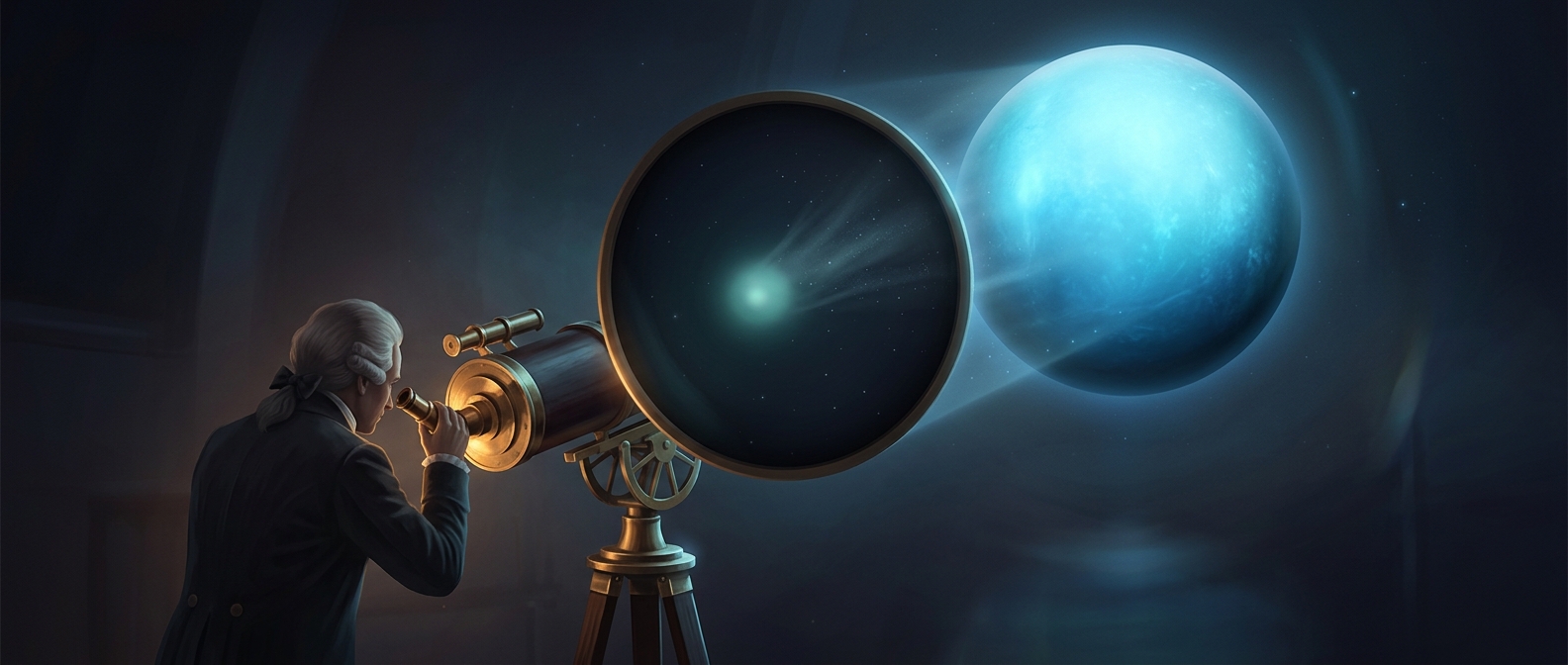
Herschel discovered Uranus thinking it was a tiny comet
At first, Herschel thought the new point of light might be a comet. But he watched it shift against the distant stars from night to night; that slow movement…
Discover more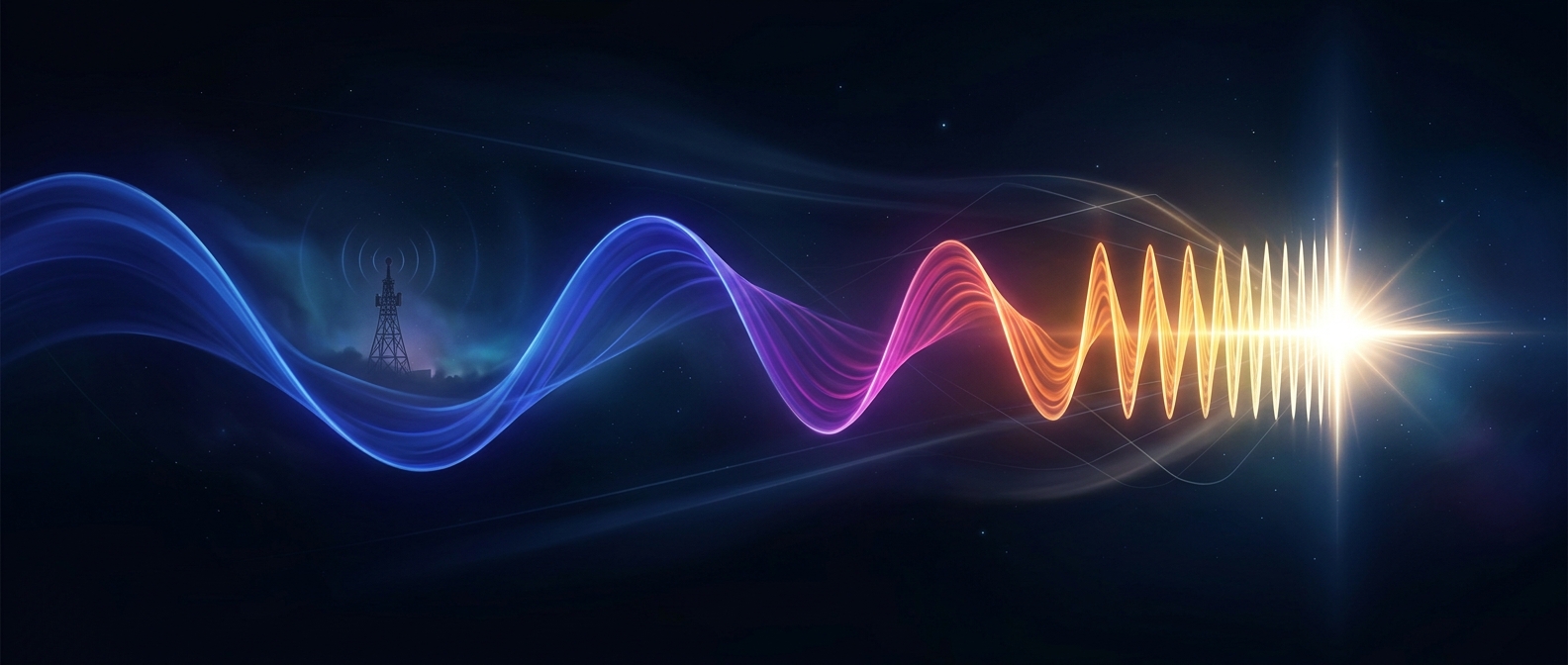
Radio waves are a kind of light too
A radio antenna catches an electromagnetic wave and turns it into a tiny electrical signal. The wave’s changing fields nudge electrons in the metal back and…
Discover more
Your brain keeps track of movement even when the lights go out
Navigation uses more than visible landmarks: movement and balance signals help estimate changes in position. Research on spatial brain cells in darkness shows…
Discover more
Termites need microbes to digest wood
A termite chews wood, but it relies on tiny gut microbes to get useful nutrients from it. The microbes break down cellulose, the tough material in plant cell…
Discover more
A rattlesnake can make itself sound suddenly closer
A 2021 experiment found that rattlesnakes increase their rattling rate as a threat approaches, then switch to a much faster rate. In a virtual-reality test,…
Discover more
Why light never slows down in a vacuum
In empty space, light travels at its fixed vacuum speed because there’s no material to interact with along the way. Put glass or water in its path, and…
Discover more
Penguins drink seawater and sneeze out the salt
Penguins can swallow salt in seawater and in their food, then remove the excess with glands above their eyes. The glands filter salt from the blood into a…
Discover more
What really happens to matter when something burns
Fire rearranges matter instead of making it disappear. The fuel combines with oxygen, forming gases that can rise and spread through the air, while minerals…
Discover more
A dinosaur tail model reached highway speed without breaking the sound barrier
A 2022 study modeled the long, whip-like tail of an apatosaurine dinosaur and estimated a tip speed around 30 meters per second—roughly 67 mph. Muscles,…
Discover more